- 1 Know Before You Go: What Actually Happened Here in 2025
- 2 Three Ways Up the Hill: Darjeeling's Nearest Airport, Rail Head and Toy Train
- 3 Getting Around: No Permits, Just a Very Particular Taxi System
- 4 You Don't Need a Permit for This One (Mostly)
- 5 Where to Sleep, By Vibe
- 6 The Tea Table: Which Estate Actually Rewards a Visit
- 7 Eating Your Way Through a Hill Station Built by the British, Fed by Tibet, and Seasoned by Nepal
- 8 Best Time to Visit Darjeeling: When the Sky Actually Clears
- 9 Trekking Beyond the Town: Sandakphu and the Sleeping Buddha
- 10 Darjeeling Trip Plan: How Long Do You Actually Need?
- 11 The Small Print Nobody Packs For
- 12 Where Tripjyada Fits In
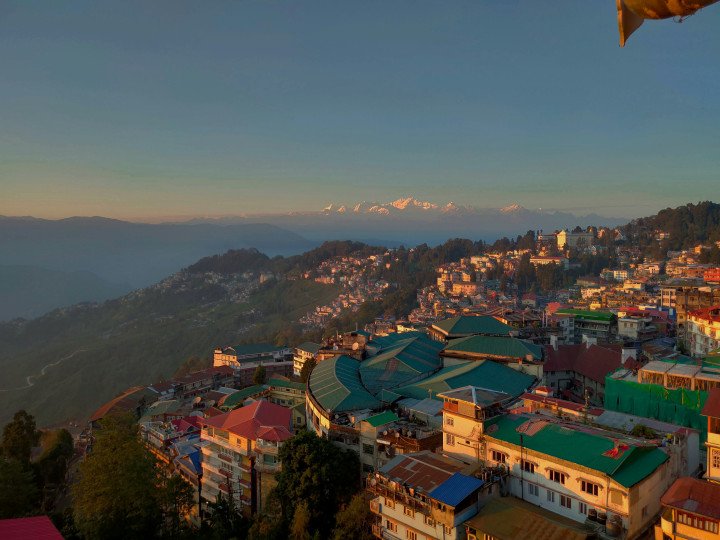
Every backpacker arrives in Darjeeling expecting Sikkim with better tea, but they leave realizing it is an entirely different animal. A Victorian hill station that the British built as an escape from the heat of Calcutta, still operating on a narrow-gauge railway older than the Eiffel Tower, still selling the same “Champagne of Teas” that has been growing since 1856, and unlike its neighbour Sikkim, it asks almost nothing of you in the way of paperwork to get in. Darjeeling tourist places range from a UNESCO-listed toy train to century-old tea estates, and almost none of them ask for a permit to see.
That’s the part that surprises people most. If you've read anything about the permit system in Sikkim, you'll come to Darjeeling expecting the same. You won’t need it.” You need a clear-eyed read on the toy train’s real schedule, the taxi system’s unwritten rules, which tea estate visit is worth your morning and which isn’t, and what actually happened to this region in October 2025 – because it matters, and most guides won’t tell you. Think of this as the practical shortlist of things to do in Darjeeling, minus the guesswork.
Know Before You Go: What Actually Happened Here in 2025
In 2025, in early October, days of continuous rain resulted in severe landslides and flooding across Darjeeling and neighbouring Kalimpong, damaging roads, collapsing bridges, and forcing a temporary shutdown of the toy train. This was a genuine disaster, and it is worth knowing about rather than discovering mid-trip. As of mid 2026, the situation has recovered substantially; the Darjeeling Himalayan is back on track, providing regular joyrides and heritage steam engine services again, and also the main road corridor is again operational. But as history speaks, this region is prone to landslides during the monsoon season, and conditions can shift as in the hills. Before you lock the dates, it is worth doing a quick check of current road and trail advisories rather than assuming everything you read (including this) is frozen in time.
Three Ways Up the Hill: Darjeeling's Nearest Airport, Rail Head and Toy Train
The fast way: Fly, then drive. Bagdogra Airport is connected with Delhi, Kolkata, Mumbai, Bengaluru, and other major cities via major operating airlines in India like IndiGo, Air India, SpiceJet, and Akasa Air. Among them, Kolkata has the shortest hop. From Bagdogra, it takes 65-95 drive to Darjeeling; still, the exact distance depends on which of the two main roads your driver takes, which takes anywhere from 3 to 4.5 hours. Only prepaid, reserved taxis operate at the airport counter itself; there is no shared jeep stand right at arrivals, so you need to budget accordingly. — and expect the Bagdogra to Darjeeling fare to reflect that lack of competition.
The scenic way: The train, then the road. New Jalpaiguri, also known as NJP, is the nearest major railhead; it is 75-88 km from Darjeeling, depending on the route, and one of the better-connected stations in eastern India for long-distance trains from places like Kolkata, Delhi, and the Northeast. From NJP, most travellers continue via Siliguri to Darjeeling by shared jeep or private car rather than waiting for a connecting toy train service.
The slow way, done properly: the toy train itself. This is the one that no one else's “how-to reach” guide gives proper credit to. The 88 km journey from NJP to Darjeeling is covered by the Darjeeling Himalayan Railway (a UNESCO World Heritage Site since 1999) in about 7 to 8 hours, winding its way up from the plains to Ghum, India’s highest railway station at over 7,400 feet, through six zig-zags and three loops, the most famous being Batasia. It's not the fastest way up. It’s the most memorable by a long way.
A longer, more scenic route via Mirik adds about an hour to the Bagdogra/NJP journey, but if you're not in a rush, the detour is worthwhile as it passes through tea gardens, a lake village, and overlooks.
Getting Around: No Permits, Just a Very Particular Taxi System
This is where Darjeeling quietly diverges from every Sikkim guide you've read: no vehicle-class restriction, no Z-series plate requirement, no protected-area vehicle rule. What Darjeeling has instead is a local taxi protection system, and it catches first-timers off guard just as often. Any Darjeeling sightseeing plan has to work around it, not against it.
Local tours within Darjeeling town itself are restricted to Darjeeling-registered taxis with the plate "WB76". This rule is in place to protect the livelihoods of local taxi owners and is not enforced in Kalimpong or Kurseong, where outside vehicles are permitted to operate. If your driver from Bagdogra offers to do your Tiger Hill sunrise run and your town sightseeing as well, he can't legally do so. You'll be switching to a local WB76 cab for anything within Darjeeling itself.
The intercity transport network is based on shared jeeps (aka “share taxis”) which depart from the Chowk Bazaar taxi stand between about 7 or 8 AM and 2 PM. After that, they become scarce, so if you want to go to Mirik or Kalimpong in the late afternoon, you will need to have a car on reserve.
Shared taxis here are generally Tata Sumos or Mahindra Max vehicles seating around ten, comfortable is a stretch, but the price reflects that. If your itinerary includes an early morning Tiger Hill sunrise (most do), reserve the vehicle the night before; pick-up times start around 4 AM, and the prime spots go fast.
You Don't Need a Permit for This One (Mostly)
If Sikkim taught you to prepare for Inner Line Permits and Protected Area clearances, here’s the good news: Darjeeling doesn’t ask anything from you, except a valid Indian visa for foreign nationals and nil for Indian citizens. It is part of West Bengal, not a restricted border state, and you can walk in, sightsee, and walk out without a single permit office in sight.
There are two real exceptions, and both are easy to miss:
Sandakphu & Singalila National Park Trek: A Forest Department permit is required for the trek, which is arranged at Manebhanjan or the park entrance near Tumling. A local guide is mandatory. It is a formality that your trekking operator will arrange as a matter of course – but it does mean you can't just wander onto the trail on your own without pausing to register first.
If you are combining Darjeeling with Sikkim: Very common, as the two are almost neighbors – foreigners can technically apply for Sikkim’s Inner Line Permit at the Foreigners’ Registration Office and the District Commissioner’s Office in Darjeeling. But most seasoned travelers avoid this route altogether, as it is a two-stage, slower process than obtaining the same permit on the spot at the Sikkim border check post at Rangpo. Darjeeling is a launch pad for sightseeing, not your Sikkim permit office. If Gangtok is next on your route, treat the Darjeeling to Gangtok leg as a fresh start, not a permit shortcut.
Where to Sleep, By Vibe
The accommodation scene in Darjeeling isn’t so much sliced by budget tier as it is by the kind of experience you’re actually buying: colonial nostalgia, tea-estate quiet, or backpacker practicality. Even the luxury hotels in Darjeeling split along these lines rather than simply competing on thread count.
A little-known secret that most itineraries miss: Ask any hotel above mid-range if they have a room facing Kanchenjunga directly, not just "mountain view," which can mean anything. The difference on a clear morning is no small thing.
The Tea Table: Which Estate Actually Rewards a Visit
This is the part Sikkim's guide doesn't need because tea tourism is unique to Darjeeling. There are some 87 tea estates in the region, not all of which are geared toward visitors. Here are the ones that are, and what you'll get out of each. Tea estates are as central to Darjeeling tourist places as the toy train itself.
A working factory tour typically includes withering, rolling, fermenting, drying, sorting, and grading – the nuts and bolts of why Darjeeling tea tastes nothing like the supermarket bag – topped off with a guided tasting. If you can go in the morning, that’s when the factory floor is really working, not just sitting quietly for the tour group.
Eating Your Way Through a Hill Station Built by the British, Fed by Tibet, and Seasoned by Nepal
Food in Darjeeling can’t be pigeonholed into a single culinary identity, and that’s the point. Three traditions stack on top of one another here, often on the same city block.
You start with the colonial institutions. Glenary's, a Darjeeling landmark for generations, runs a rooftop bakery-restaurant-pub combo with fresh bread and pastries and a menu that swings from momos and thukpa to English breakfasts and wood-fired pizza, a genuinely strange and genuinely working combination. Keventer's, a heritage eatery dating to 1889, is famous specifically for cheese-and-ham toast eaten on a rooftop with Kanchenjunga in the frame – arrive early for the clearest views and the shortest queue.
The real local flavor is in the Tibetan and Nepali kitchens. Kunga, on Gandhi Road, serves authentic Tibetan thukpa, momos, and shapta (stir-fried meat) in a small, unpretentious room. Look for jhol momo (dumplings in a thin gravy, not just dipped), alu tama (a tangy potato-and-bamboo-shoot curry), and sel roti for breakfast. If you want a soup that is nuttier and more textured than the usual, try the Sherpa-style thukpa bhoot, which uses buckwheat noodles instead of the standard wheat. Try it at least once, if only because you won’t find it in Gangtok.
Chowk Bazaar is the street-food heart of Darjeeling, with stalls serving momos, thukpa, and aloo dum, many of them having done so for far longer than any rooftop restaurant, and for a fraction of the price.
For vegetarians: Sonam’s Kitchen has a truly international vegetarian menu, pancakes, hummus, sandwiches, a welcome break from the momo-thukpa rotation. Most Tibetan & Nepali places have good veg momo & veg thukpa as standard, not an afterthought.
For Jain travelers or anyone needing strictly onion-and-garlic-free food: Darjeeling doesn’t have Gangtok’s density of dedicated Jain restaurants, so the same rule applies here as across the hills, call ahead, ask your hotel kitchen directly, and build it into your operator’s brief rather than hoping to find a sign on Mall Road.
And don't skip the real tea. A true tasting at a tea estate or an old-town tea shop (Nathmulls is the name locals point you toward) will teach you more about what makes Darjeeling tea distinct than any menu item ever will.
Best Time to Visit Darjeeling: When the Sky Actually Clears
There's no single best time to visit Darjeeling, it depends on whether clear peaks or quiet trails matter more to you. If you have only one non-negotiable, which is to see Kanchenjunga clearly, then you put your money on March–May and October–November.
Trekking Beyond the Town: Sandakphu and the Sleeping Buddha
Sandakphu is why serious trekkers spend so many extra days, Darjeeling town is the postcard. It’s the highest point in West Bengal, at 3,636 metres (11,930 feet), perched on the Singalila Ridge that forms the actual border with Nepal and on a truly clear day, it’s one of the only places in India where you can see four of the world’s five highest peaks (Everest, Kanchenjunga, Lhotse, and Makalu) from one spot, arranged around the famous “Sleeping Buddha” silhouette.
The trek usually begins at Manebhanjan, about 26 km from Darjeeling, and passes through rhododendron and magnolia forest before opening out to ridge-line views. A basic 4-day trek costs about ₹10,000-12,000 per person, generally inclusive of permits, a required local guide, and basic tea-house accommodation en route.
The one hard rule: Singalila National Park closes down completely from mid-June to mid-September for monsoon, no permits are issued, no exceptions. Outside that window, March–May and October–November offer the best balance of clear skies and tolerable cold, with November nights approaching freezing at altitude.
Darjeeling Trip Plan: How Long Do You Actually Need?
Weekend (2N/3D) Darjeeling town only: Toy train joyride to Ghum, Tiger Hill sunrise, one tea estate, Chowk Bazaar for dinner. Tight, but genuinely rewarding if that’s all the leave you have. A tight but real Darjeeling sightseeing loop for a short weekend.
The classic trip (4N/5D): Darjeeling (3N) with day trips to either Mirik or Kurseong and Kalimpong (1N) for a change of pace and a look at a hill town that gets a fraction of the tourist traffic that Darjeeling does.
The Twin State circuit (7N/8D): Darjeeling (3N) → Kalimpong (1N) → Gangtok, Sikkim (3N). This Darjeeling to Gangtok progression is the combination that most first-time Himalaya travellers actually want — a registered operator's permit-handling stops mattering for the Darjeeling leg, and starts mattering a great deal the moment you cross into Sikkim.
The trekker's extension (9-12 days): Darjeeling (2N) -> Manebhanjan -> Sandakphu/Phalut trek (5-7 days) -> Darjeeling (1N) to recover and have a good meal before flying out.
The Small Print Nobody Packs For
Layer for a real temperature swing. Bagdogra can be 30°C in the plains, while Darjeeling sits at 15°C the same afternoon. Pack for both ends of that gap, not just the destination.
Book a sunrise vehicle to Tiger Hill the night before. 4 am departures are fully booked very quickly in high season, and just showing up at 3:45 am hoping for a spare seat rarely works.
WB76 plates are more than just noise. If a non-local taxi tries to run your Darjeeling town tour, that’s not a bargain, it’s illegal and can cause problems mid-trip.
The entire NJP – Darjeeling run of the toy train has to be booked well in advance during the peak season. Seats are limited, and the demand for heritage runs is high. The shorter Darjeeling–Ghum joy ride is more flexible.
Take cash for Chowk Bazaar and smaller tea-estate shops – card acceptance drops off quickly as you leave Mall Road.
Good, worn-in shoes matter, even if you’re not trekking. The town of Darjeeling itself is so steeply pitched that “just walking around” is a workout.
Where Tripjyada Fits In
Darjeeling itself doesn’t need much hand-holding – no permits, a simple taxi system, a toy train you can mostly book yourself. Where a destination management company like Tripjyada really earns its keep is at the edges: the moment your trip ceases to be “just Darjeeling” and becomes the twin-state circuit almost everyone eventually wants. Most of the places to visit in Darjeeling need nothing more than a taxi and a plan.
Tripjyada is a registered DMC covering Sikkim, Darjeeling, Bhutan, and Meghalaya, built around the places to visit in Darjeeling and beyond, for a reason:
For independents, planning gets messy at the Darjeeling-Sikkim handoff. The moment your itinerary touches Gangtok or North Sikkim, you're back in permit territory, and having one operator for both legs means the paperwork is not your problem mid-trip.
Permits, a compulsory guide, and tea house bookings for the Sandakphu trek – get these organised before you set foot in Manebhanjan rather than sorting them out at a forest office with a group waiting behind you.
Chosen heritage hotels, tea-estate stays and homestays across Darjeeling, Kalimpong and Kurseong, tailored to the kind of trip you are actually taking, not just what has a room free.
Any dietary requests, Jain, vegetarian, or anything specific, are flagged to hotel kitchens in advance, which is more important in a region where dedicated options are thinner outside the main town.
On-ground support if the hills do what the hills sometimes do: A landslide advisory, a road closure, a rescheduled toy train run, with someone already in place to adjust the plan rather than leaving you to figure it out from a hotel lobby.
Having run this exact circuit for years and with tens of thousands of travellers as proof, the real value of a Tripjyada Darjeeling trip is not unlocking something you couldn’t do yourself – it’s making sure the one leg of your trip that does get complicated, usually the Sikkim crossing or the trek into Singalila, doesn’t eat into the days you came here to actually enjoy. The goal is simple: more time at the actual Darjeeling tourist places, less time solving logistics.