- 1 Pelling at a Glance
- 2 Is Pelling the Right Base for Your Sikkim Trip?
- 3 How to Reach Pelling
- 4 Pelling’s Transport System
- 5 Permits and Documents
- 6 Where to Stay in Pelling
- 7 Places to Visit and How Long They Actually Need
- 8 Days Trips from Pelling
- 9 What and Where to Eat
- 10 Best Time to Visit Pelling
- 11 Which Peeling Trip Fits You?
- 12 Realistic Pelling Trip Budget
- 13 Pelling Itinerary Options
- 14 Mistakes Travellers Commonly Make
- 15 Why Choose Tripjyada for Pelling?
Pelling is sold on one line, Kanchenjunga views and a glass skywalk, and that undersells what a compact, workable base for West Sikkim’s monasteries, lakes and heritage towns. It’s also oversold the other way, as a two-day photo stop bolted onto a Gangtok trip. This usually means a rushed morning and a missed Kanchenjunga sunrise because nobody planned around the weather.
Pelling is a ridge-top town, but not a large one, and its real value is as a base: Pemayangtse and Rabdentse are within 10 km, Khecheopalri Lake and Yuksom are a manageable day’s drive, and the road on to NJP or Siliguri does not double back through Pelling once you have moved on to Yuksom. Just that single detail of routing changes how a multi-day itinerary should be designed.
Tripjyada’s guide tells you how to get there, where to stay, how much time you need for each attraction, and includes three day-by-day itineraries with routes and distances checked against how the roads actually connect (itineraries are where most Pelling trips go wrong).
Pelling at a Glance
Is Pelling the Right Base for Your Sikkim Trip?
For a trip focused on West Sikkim, yes – Pelling is the natural base for the Pemayangtse-Rabdentse heritage circuit and the nearest comfortable town to Khecheopalri Lake and Yuksom. If your Sikkim leg is only West Sikkim, there is no need to route via Gangtok at all, drive directly to Pelling from NJP or Bagdogra.
The trouble starts when Pelling is treated as a quick add-on to a Gangtok-based trip. Gangtok to Pelling is 5-6 hours each way so a one nite dash rarely leaves time for the monastery circuit, let alone Khecheopalri or Yuksom. You pay for two long travel days to see very little. West Sikkim is just a small part of a larger circuit, so Ravangla (2-2.5hrs from Pelling) is often the more practical base, if you want to sample this area without adding extra nights.
As a rough guide: Pelling heritage circuit alone - 2 nights, add Khecheopalri and Yuksom - 3 nights, add Singshore Bridge and Uttarey without rushing - 4 nights.
How to Reach Pelling
Pelling has no airport or railway station of its own; Bagdogra Airport and NJP railway station, both roughly 135-145 km away, are the standard gateways, followed by a 5-6 hour road journey. Different sources quote quite different numbers for this distance (some say about
160 km via Bagdogra), but this is common for hill routes where the “distance” depends on which road variant is quoted; consider 5-6 hours as the more reliable planning figure.
Travel time depends more on road conditions through Jorethang and Legship than on the raw kilometre count; this stretch sees periodic landslide disruption in the monsoon, and the last hour of climbing to Pelling itself is a slow, winding road regardless of season.
Avoid routing through Gangtok if West Sikkim is your only Sikkim stop; it adds a full day of driving for no sightseeing gain. The shorter, more direct approach is straight from NJP or Bagdogra via Jorethang.
Pelling’s Transport System
Pelling is small enough to walk much of Upper Pelling, but the town stretches along a ridge, and hotels farther down or across the spur still need a vehicle for anything more than a short stroll. Local sightseeing (Pemayangtse, Rabdentse, Sanga Choeling, the Skywalk) is usually a half-day taxi circuit rather than a walk, as the sites are several kilometers apart on hilly roads.
Gyalshing (Geyzing) is the area's main transport hub, about 10 km away, with more shared jeeps leaving than Pelling itself, especially later in the day. If you find there are not many options for leaving Pelling to go to Yuksom or NJP, a short trip to Gyalshing will usually give you more frequent connections.
For excursions further afield – Khecheopalri, Yuksom, Singshore Bridge, a private vehicle for the day is the practical choice for families and couples. Solo travelers comfortable with fixed timings can generally piece together shared jeeps via Gyalshing, though this requires more patience than a private car.
Permits and Documents
There is no special permit required for normal sightseeing around Pelling, Gyalshing, Khecheopalri, Yuksom or Tashiding; Indian nationals only need a government photo ID (passport, voter ID or driving licence) for hotel check-in and routine checks. The entire state is a restricted area and foreign nationals require an Inner Line Permit (ILP). The ILP is usually valid for 30 days and is available free of charge at the Rangpo/Melli check posts, Bagdogra airport, NJP, or in advance from Sikkim Tourism offices.
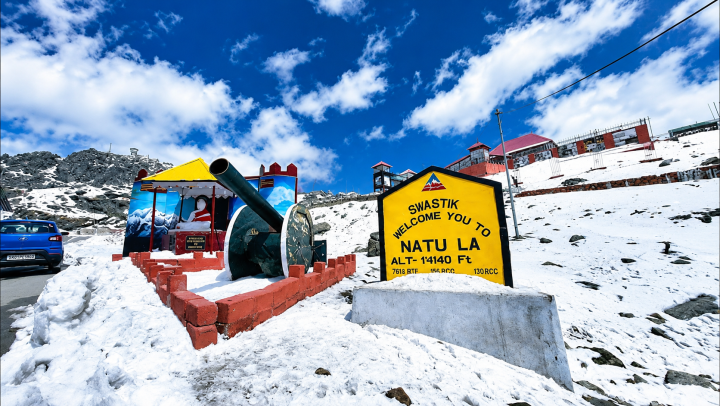
Unlike the day-to-day sightseeing of Gangtok’s Tsomgo Lake or Nathula excursions, where a Protected Area Permit is required, this region is outside of those border-adjacent zones, and so there is no need for the same.
Trekking inside Kanchenjunga National Park, including the Dzongri and Goecha La routes starting at Yuksom, is different: it needs a separate Forest Department trekking permit, a registered agency and typically a guide, arranged in advance rather than on arrival. Rules for group size and solo-trekking have changed more than once in recent years, so make sure you check current requirements with a registered operator when you book. A Yuksom stopover is not an easy launch point for an impromptu multi-day trek.
Where to Stay in Pelling
Pelling is a ridge town, so a “mountain view” and a “Kanchenjunga view” are not the same thing – ask for a photo of the actual outlook of the room rather than assuming every room on the hill faces the peak. Booking sites rarely tell you if a taxi can get to the entrance directly; some properties in Upper Pelling have a flight of steps from the road, which matters for seniors and heavy luggage.
Hot water is usually available in the mornings & evenings, not 24 hours; outside of premium-hotel & heater use sometimes can be charged separately in winter, worth asking at check-in. Yuksom especially relies more on homestays and lodge kitchens rather than restaurants, so you need to agree dinner timings in advance with your host.
Places to Visit and How Long They Actually Need
Heritage Circuit Near Pelling (Half Day)
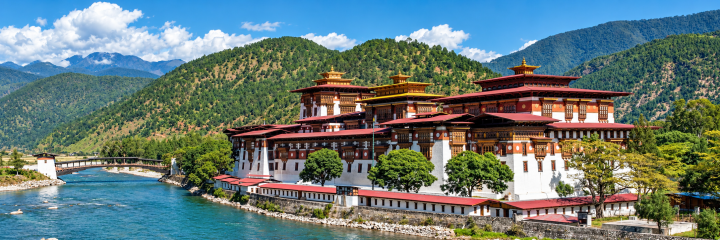
Pemayangtse Monastery: One of the oldest major monasteries in Sikkim, Pemayangtse Monastery is about 10 km away from Pelling and will take 45 minutes to an hour to visit. Hours can change with the puja schedule, so check locally. Nearby are the Rabdentse Ruins, the former royal capital, a 15-20 minute walk through a forested approach from the parking area. It’s worth building into your schedule rather than expecting a roadside stop, and not ideal for travellers with significant mobility limitations. Together they make a natural two-hour visit including the walk.
Sanga Choeling and the skywalk (Half Day)
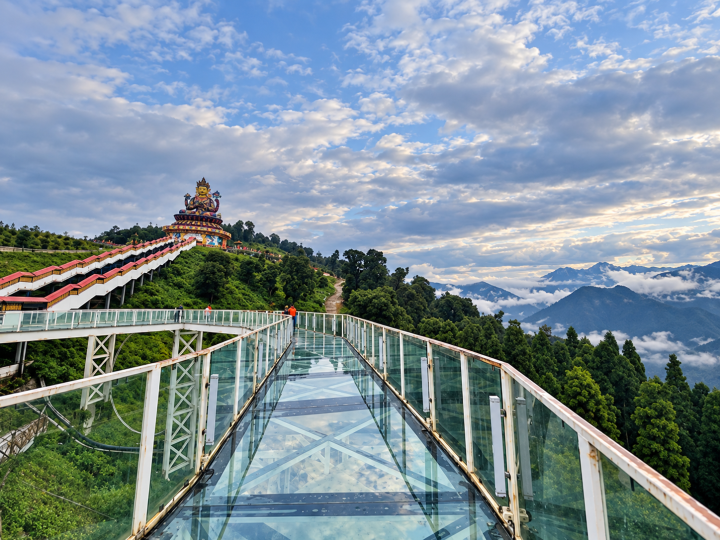
Sanga Choeling monastery is one of the oldest in Sikkim and is above Pelling, requiring a real uphill walk or steps; check current access before committing seniors or young children to this leg. The nearby Skywalk and Chenrezig statue complex is shorter and flatter and works well combined with Sanga Choeling or as a standalone half-hour stop otherwise.
What Looks Convenient on a Map but Isn’t
Sanga Choeling monastery is one of the oldest monasteries in Sikkim, and is situated above Pelling and involves a real uphill walk or steps; check current access before committing seniors or young children to this leg. The nearby Skywalk and Chenrezig statue complex is shorter and flatter and works well in combination with Sanga Choeling or a standalone half-hour stop otherwise.
Days Trips from Pelling
Yuksom Heritage Circuit (Non-Protected)
Yuksom (36-40 km, 1.5-2 hrs each way). Yuksom has the Norbugang Coronation Throne, where Sikkim's first Chogyal was crowned, and Dubdi Monastery, which is about 30 minutes hike uphill. This heritage visit does not require any special permit, merely the usual Kanchenjunga National Park walking paths. Yuksom warrants an overnight stay, not a hasty day trip there and back; read the itinerary alternatives below for why.
Singshore Bridge, Dentam and Uttarey (Not Protected)
Sources vary considerably in the distance from Pelling to Singshore Bridge - numbers range from about 5 km to just over 20 km across references, suggesting uncertainty about the bridge itself and the wider Dentam/Uttarey approach. Don’t just make a quick hop. Plan a half- to full-day round trip, and recheck the current distance locally before spending considerable time on it. Further on, Uttarey is for the traveler who wants quiet village time – it’s no good getting there just to turn back after a few minutes.
Tashiding Monastery
Tashiding, best coupled with a Yuksom overnight rather than crammed into a single Pelling viewing day, stands on a mountaintop above the Rathong and Rangit rivers and functions as a heritage stop en route between Yuksom and the Jorethang road.
What and Where to Eat
Pelling has the typical West Sikkim variety: momos, thukpa, Nepali dal-bhat thalis, and popular North Indian and Chinese meals, concentrated along the main Upper Pelling stretch, with options tapering out somewhat after dark and even more once you start heading toward Gyalshing or Yuksom. Gyalshing is a better bet for everyday local meals and daily supplies than for tourist-facing restaurants. Yuksom relies mostly on homestay and lodge kitchens, so let your host know your dinner intentions in advance.
Vegetarian meals are simple to come by. Jain and vegan travelers should flag requirements before arrival, especially for Yuksom or Uttarey accommodations, as stock, butter, and dairy are not usually clearly labeled on menus.
Before making a reservation, double-check the statistics above since they represent an approximate planning range.
Best Time to Visit Pelling
The statistics above are an approximate planning range. Make sure to double-check before making a reservation.
Which Peeling Trip Fits You?
Realistic Pelling Trip Budget
The numbers below are indicative planning ranges, per person per day, and twin-sharing; double-check before making a reservation.
Pelling Itinerary Options
Here, routing detail is more important than in most West Sikkim guides: after you reach Yuksom, you don't need to go back through Pelling on the way to NJP and Siliguri via Jorethang. Without sacrificing sightseeing, ending a Pelling-plus-Yuksom trip by leaving straight from Yuksom instead of going back to Pelling first typically saves a Pelling-Yuksom leg's worth of driving, about 40 km and 1.5–2 hours. That is the foundation of the itineraries that follow.
Option 1: Pelling Essential (2Nights / 3 Days)
Option 2: Pelling Plus Yuksom (3 Nights / 4 Days)
Option 3: Relaxed West Sikkim with Buffer (4 Nights / 5 Days)
Mistakes Travellers Commonly Make
The most frequent mistake is to book an early flight or train the same morning you depart West Sikkim. A 5-6 hour drive from Pelling, or a similar distance from Yuksom, can extend further with a landslide clearance near Jorethang, and a missed flight from Bagdogra cannot be recovered. If your departure is truly early, add a buffer night in the Siliguri area.
One particular, preventable waste on this circuit is going back to Pelling after Yuksom just out of habit; once you have reached Yuksom, the direct Jorethang road toward NJP or Bagdogra is usually shorter. Another common disappointment is assuming that every "Kanchenjunga view" room offers the same view; get a picture first.
Other persistent problems include treating Khecheopalri as a quick roadside stop rather than the actual amount of time it takes to drive there, selecting a hotel without considering the steps or taxi access, cramming Khecheopalri and the heritage circuit into one hurried day, disregarding monsoon rain buffers, and assuming a stopover in Yuksom doubles as casual access to a protected Kanchenjunga trek without the appropriate agency and permit in place.
Why Choose Tripjyada for Pelling?
Good planning for a Pelling trip is about sequencing, not a longer checklist – which circuit works in a half day, when Yuksom demands an overnight instead of a rushed detour, and where the road can actually cut travel time and not add to it. Tripjyada builds West Sikkim itineraries on these pragmatic decisions.
That means routing you directly from NJP or Bagdogra when Gangtok is not on the itinerary, choosing a hotel area that matches whether you want Kanchenjunga views or easier road access, and pacing out the heritage circuit, Khecheopalri, and Yuksom across different days instead of compressing them. If trekking in Kanchenjunga National Park is part of the plan, we arrange the forest permit and registered-agency requirements in advance, so it is no surprise on arrival in Yuksom.
We also plan the route for travelers combining Pelling with Gangtok, Ravangla or Darjeeling, so as to avoid the kind of backtracking this guide flags, including finishing a Yuksom leg without an unnecessary return to Pelling. If you are wondering how to fit West Sikkim into a broader Sikkim trip, contact Tripjyada and we will help you design a realistic itinerary around it.
Two nights cover the Pemayangtse-Rabdentse-Sanga Choeling heritage circuit comfortably. Add a third night for Khecheopalri Lake and Yuksom, and a fourth if you want Singshore Bridge and Uttarey without rushing.
No permit is required for Indian citizens for ordinary sightseeing around Pelling, Gyalshing, Khecheopalri, or Yuksom—a valid photo ID is enough. Only trekking inside Kanchenjunga National Park needs a separate forest permit and a registered agency.
Yes. NJP to Pelling is a direct road journey of around 135-140 km via Jorethang and Legship, typically 5-6 hours, with no need to route through Gangtok unless it is part of your itinerary.
Yes, with some planning. Favor Middle Pelling for more level road access, choose the Pemayangtse-Rabdentse circuit over Sanga Choeling's uphill walk, and confirm a hotel's steps and taxi access before booking.
Upper Pelling suits travellers prioritising Kanchenjunga views and accepts steeper access; Middle Pelling offers a more even balance of views and accessibility. Gyalshing is more functional than scenic but useful for transport connectivity.
No. Even in the clearer months of March-May and October-November, cloud cover can persist for days. Treat a clear view as a strong probability in season, not a guarantee, and allow more than one sunrise attempt if it matters to your trip.
Choose Pelling for views, monastery access, and a wider choice of hotels; choose Yuksom for history, village pace, and access to Kanchenjunga National Park trekking. Many trips reasonably do both across separate nights.
It can be budget-friendly or premium depending on hotel category and how much private-vehicle sightseeing you include—see the budget table above for indicative per-day figures across categories.
Yes, this is a common and practical combination, typically 4-5 hours apart by road. It works better as a direct Darjeeling-Pelling link than as a detour through Gangtok.
Not necessarily. If Yuksom is your last stop before heading back toward NJP or Bagdogra, the direct road via Jorethang is generally quicker than returning to Pelling first—plan your departure day accordingly.