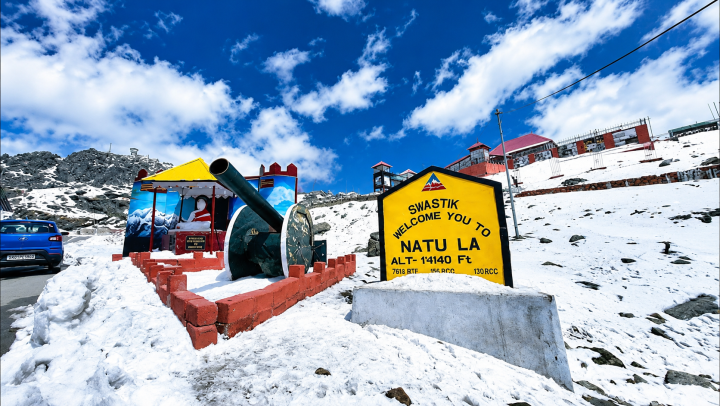
There is one place in Sikkim where mountains, history, and international borders all come together; it is the Nathula Pass. This historic mountain pass sits high up in the Eastern Himalayas and offers travelers the rare chance to arrive at an international border in dramatic Himalayan scenery.
Nathula is not your regular sightseeing stop at an altitude of about 14,140 feet (4,310 meters). The air is thinner, and the weather can change fast. A short walk can leave you surprisingly breathless. But that’s part of the adventure too. How many day trips can take you to the India-China border, show you snow-capped mountains, and then take you back to Gangtok for momos?
Nathula Pass was an important part of the old Silk Route, linking India and Tibet. Today it is a strategically important border area and a popular tourist destination open to eligible Indian visitors with the required permits.
Nathula Pass Overview
Official sources may give slightly different figures for distances and altitude due to the manner in which the route and location are measured.
A Short History of Nathula Pass
Nathula’s story is a mile beyond tourism.
For centuries, the pass was part of the old Silk Route, a great trading network linking Tibet to India. Traders and mule caravans crossed this rugged Himalayan terrain, carrying goods between the two regions.
After the 1962 India-China war, the route was closed. The historic route had been closed for decades until 2006, when limited border trade through Nathula resumed, opening a new chapter.
The region also has significant military importance. Today, there are memorials to the soldiers who died fighting between India and China in the Nathula area in 1967.
Today, visitors can approach the international border under controlled conditions. However, Nathula is a sensitive military area, and tourists need to abide by the instructions of the security personnel and local authorities.
Where is Gangtok Nathula Pass Situated?
Nathula Pass is located in East Sikkim, about 54-56 km from Gangtok. The road climbs steadily from the capital toward the high Himalayan terrain, through spectacular landscapes.
The trip itself is an important part of the experience.
As you go up in the vehicle, the landscape changes from green mountain slopes to rough terrain and snow (depending on the time of year). The route passes the famous Tsomgo Lake, enabling you to combine several attractions in one day.
Nathula is a restricted border area, and you can't just hire a car and drive there yourself. Permits for Nathula Pass are given by registered travel agencies as per the Sikkim Tourism guidelines, and the vehicle permit is processed at the concerned police check post.
How to Get to Nathula Pass from Gangtok
The easiest way to visit Nathula is to hire a day trip with a registered travel agency. They will let you know in detail, including the Gangtok to Nathula Pass fare, which is quite important while your journey is ahead.
The usual trip goes like this:
Gangtok – Tsomgo Lake – Baba Harbhajan Singh Memorial – Nathula Pass – Gangtok
The itinerary is subject to changes due to weather, road conditions, permits, and security restrictions.
The road is a mountain road and a difficult one in snow or bad weather. The reason is that access is controlled. Usually visitors come in vehicles that are permitted rather than in normal private cars.
If you are planning your trip during a busy season, it is a very good idea to arrange your permit and vehicle in advance. Himalayan roads are sadly gifted in many ways, but running to your desired schedule isn’t one of them.
Nathula Pass Permit
Nathula is a Protected Area, and a permit is compulsory.
As per the latest data from Sikkim Tourism permits, the Nathula Pass permit is issued by the Tourism Department, and the vehicle permit is processed through the Police Check Post. The application is done via a registered travel agency.
The official document requirements for Nathula for Indian tourists as of now are:
Driving Licence or Voter ID, two passport-sized photos, additional documentation for children under 18, including birth certificate and parent/guardian ID.
As per the Sikkim Tourism website, currently Aadhaar is not accepted for the Nathula permit.
Can foreigners visit Nathula Pass?
No. Foreign tourists are not allowed to visit Nathula Pass as per the latest Sikkim Tourism permit rules. This is unlike Tsomgo Lake, where foreign visitors have separate permit provisions.
Regulations on permits can change, so it is always advisable to check the requirements with your registered travel agency before you travel.
Best time to visit Nathula Pass
Nathula Pass weather can be beautiful in different seasons, but the experience varies greatly as the year progresses.
April - June
In general, spring and early summer are relatively pleasant by comparison to the worst months of winter. The surrounding mountains are generally clearer, but weather can change fast at high altitude.
It is also a popular time to travel, so permits and vehicles should be arranged in advance.
July - September
The monsoon season can make travel more unpredictable. Sikkim receives heavy rain, and mountain roads can be prone to landslides and poor visibility.
If Nathula is the main reason for your visit, allow some flexibility in your itinerary during this period.
October - November
This can be a great time for travelers seeking crisp mountain views and cooler temperatures. But there are never any guarantees about snow conditions on any given day.
December - March
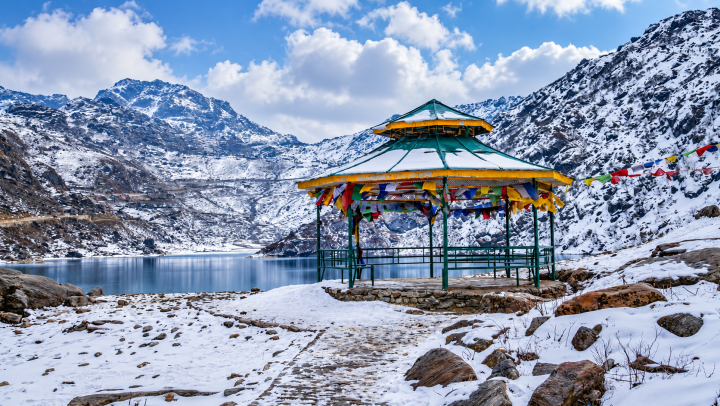
Winter turns Nathula into a snow-covered Himalayan landscape. Temperatures can drop well below freezing, and heavy snowfalls can impact access to roads.
Sikkim Tourism says that snow can remain in winter, and Nathula is one of the places where tourists can enjoy snow.
Note: Nathula may be closed temporarily due to snow, road conditions, weather, or security reasons. Please check road and permit status just before your trip.
What to see and do at Nathula Pass
1. Toward the Border
One of the biggest highlights is getting to the designated visitor area close to the India-China international border.
The climb has stairs, but once you get up to about 14,000 feet, you will feel the lack of oxygen much more than you would at sea level.
Take it slow. No first prize to the top.
2. Take in the Himalayan Landscape
Nathula offers breathtaking views of the high-altitude landscape around. On clear days, the view opens out dramatically over the mountains and valleys.
The mountains might also play hide-and-seek with the clouds, so do not be disappointed if they appear all of a sudden.
3. Know About the Historic Silk Route
The pass is not merely a scenic overlook. Knowing what its role was on the historic trade route makes the journey so much more meaningful.
The old Tibet-India route went across the Himalayan landscape and was an important regional trade route until it was closed in the 20th century.
4. See Military Memorials
Nathula’s military history is an important part of the destination. Memorials in the area are dedicated to Indian soldiers who died in the conflicts in the area.
Visitors should have a respectful attitude because this remains an active and strategically sensitive border area.
Other Places to See on the Nathula Route
A trip to Nathula is rarely only about Nathula.
Tsomgo Lake
Tsomgo Lake is located on the way to Nathula and is one of the most popular high-altitude tourist attractions of Sikkim.
The lake is over 12,000 feet high and changes its character with the seasons. In winter, it can freeze, and in spring and summer, the landscape around it is of different colors.
Baba Harbhajan Singh Memorial
Baba Harbhajan Singh Memorial is another popular stop on the route. It’s a memorial to an Indian Army soldier whose story has been synonymous with the region.
It's a military memorial, but it's also a place of local beliefs and stories.
Is it worth visiting Nathula Pass?
Sure. As long as you know what kind of experience you are signing up for.
Nathula is not a place to hang around for hours visiting cafes, shopping, or leisurely exploring. A short high-altitude trek with a mix of history, military importance, and spectacular Himalayan scenery.
The journey to Gangtok is as memorable as the destination. Drive through changing mountain landscapes and stop at Tsomgo Lake and Baba Harbhajan Singh Memorial. Finally, reach one of the most fascinating border areas of India.
You might catch your breath at the altitude, but at least the views give you a pretty good reason to stop and do just that.
Conclusion on Nathula Pass Tour
Nathula Pass is one of those Sikkim experiences that is a beautiful combination of adventure and history, and very few destinations can boast of that. From its significance on the historic Silk Route to its role as an international border today, Nathula is more than just a beautiful mountain view.
Plan your trip from Gangtok, obtain the Protected Area Permit from a registered travel agency, wear appropriate clothing for the altitude, and be prepared to be flexible about weather and road conditions. Above all, respect the military sensitivity of the area and obey all official instructions.
A trip to Nathula Pass can be one of the most unforgettable things to do in Sikkim with the right preparations. And yes, the photos will probably make everyone back home wonder why they weren’t invited.
Note: Nathula is a sensitive border area, and permit rules, operating days, road access, and visitor restrictions are subject to change. Please check the latest instructions from the Sikkim Tourism Department and your registered travel agency before you travel.
Nathula Pass is famous for its location on the historic Old Silk Route, dramatic Himalayan scenery and strategic position on the India–China border. Situated at approximately 14,140 feet, it combines history, mountain views and a distinctive high-altitude travel experience.
Nathula Pass is approximately 54–56 kilometres from Gangtok. The journey takes place on steep mountain roads, so travel time varies according to traffic, weather, permit checks and road conditions.
Yes. Nathula Pass is a protected border area, and eligible Indian travellers require a permit. Applications are generally processed through a registered travel agency, while access remains subject to document verification and government approval.
Travellers generally need an accepted proof of Indian nationality and passport-sized photographs. A birth certificate and parent or guardian identification may be required for minors. Aadhaar is not accepted as proof of nationality for this permit. Requirements should be reconfirmed before travelling.
No. Current official guidance limits Nathula Pass permits to Indian nationals. Foreign visitors may be eligible for permits to certain other protected destinations, including Tsomgo Lake, subject to the applicable rules.
A typical excursion from Gangtok combines Nathula Pass with Tsomgo Lake and the Baba Harbhajan Singh Memorial. Every visit remains subject to permit availability, weather, road conditions and security instructions.