- 1 South Sikkim at a glance
- 2 When is the best time to visit South Sikkim?
- 3 How to reach South Sikkim
- 4 How to travel within South Sikkim
- 5 South Sikkim tourist spots worth your time
- 6 Where to stay in South Sikkim
- 7 What and where to eat: By budget
- 8 South Sikkim permits: what you need and what you do not
- 9 Ready-to-use South Sikkim itineraries
- 10 A realistic South Sikkim budget
- 11 Common South Sikkim planning mistakes
- 12 What to pack
- 13 Why choose Tripjyada for a South Sikkim tour?
South Sikkim doesn’t announce itself with a traffic jam, a crowded promenade, or a queue of vehicles waiting for a mountain permit. The appeal is quieter and, for many travellers, more useful: shorter drives, lower altitudes, important monasteries and temples, tea-covered slopes, village stays, and clear views of the Kanchenjunga range when the weather is good.
This guide is about the decisions that matter. How to get to South Sikkim, how much local transport costs, where to stay, how much to budget for food, which permits are actually needed, and how to choose an itinerary that suits the people travelling, not just the number of days available.
Price Note: All prices below are planning ranges in Indian rupees and were checked in August 2026. Mountain rates and room rates vary with the season, the weather, the type of vehicle, demand, and road conditions. Before paying, confirm what's included and how much it'll cost.
South Sikkim at a glance
When is the best time to visit South Sikkim?
There is no perfect month to visit South Sikkim, but rather there is only the right trade-off.
March to May: flowers and comfortable sightseeing
During spring, you will encounter mild weather during the daytime, including rhododendrons and active tea gardens. This time is considered to be an easy period for families and first-time visitors. As this is a popular month for all backpackers around the world, it is advised to book good rooms and larger vehicles as early as possible.
June to September: green, quiet, and unpredictable
As the monsoon hits Sikkim, it turns its hills intensely green, and hotels in front of travellers lower their prices during this time. At this time, one can find many natural phenomena such as clouds, leeches on forest trails, landslide risk, and possible road delays. Building a well-planned itinerary around this time is not advised.
October to December: clearer mountain views
The ideal time to view the Kanchenjunga range is thought to be after the post-monsoon. For outdoor touring and photography, October and November are very appealing. As December approaches, the nights get colder, particularly in Ravangla and Borong.
January to February: quiet but cold
Winter suits travellers who like fewer crowds and don't mind cold rooms or early sunsets. Make sure the hotel has good hot water, room heating or good bedding; heating could be extra.
How to reach South Sikkim
The first planning decision is not whether to take a train or fly. Whether to go directly into South Sikkim or go via Gangtok. If you are doing a South Sikkim-only trip, then you can save time by going directly to Namchi from Bagdogra, NJP, or Siliguri.
By air: Bagdogra is the practical gateway
Most of the travellers consider Bagdogra Airport (IXB) the most reliable air gateway. The road journey to Namchi usually takes around 3.5 to 5 hours, and to Ravangla around 4.5 to 6 hours. Rain, roadworks, and traffic around Siliguri might prolong the journey.
Indicative one-way private-cab prices:
Shared transfers pre-booked may be around ₹800-₹1,800 per seat depending on routes and vehicle. Shared services to Namchi or Ravangla are less frequent than to Gangtok. If you don’t get a direct seat, go to Siliguri. From there, you can take a shared jeep.
What about the Pakyong Airport?
Pakyong is geographically advantageous for Gangtok, but flight schedules could be limited and weather-dependent. By default, it is not the best airport for a South Sikkim itinerary. Compare the real flight, arrival time, and transfer – not just the distance on the map.
By train: NJP offers the widest choice
The main rail gateway is New Jalpaiguri Junction (NJP). It is well connected to Kolkata, Delhi, Guwahati, and other major cities. Travellers can book a cab from NJP, book a shared transfer, or head to a Siliguri taxi stand for more shared-jeep options.
Indicative one-way fares:
Shared vehicles usually leave when full and don’t offer much room for luggage. A cheap seat can be uncomfortable if each passenger brings a big suitcase. Those travelling with children, senior citizens, and groups of three or more should compare the total seat cost with a private car before making a decision.
By road from nearby destinations
South Sikkim fits naturally into a multi-destination route.
Consider these as planning windows, not as commitments. In the Himalayas, distance is not a good predictor of time.
How to travel within South Sikkim
South Sikkim is not a big city with point-to-point public transport convenience. Shared jeeps run between the main towns; attractions outside town usually require a local taxi or pre-arranged transport.
Shared jeeps
If you are travelling alone and your schedule is flexible, shared jeeps are the cheapest option. Expect ₹100–₹500 per person per sector for nearby towns depending on the distance. They depart from local taxi ranks, normally when full, and are less frequent in the later part of the day.
Best for: solo travellers, light luggage, flexible schedules.
Do not travel with small children, suitcases, limited mobility, or a fixed plan for sightseeing.
Reserved local taxis
A reserved car provides control over departure times and stops. A local sightseeing day usually costs between ₹3,000 and ₹5,000 for a small vehicle and between ₹4,500 and ₹6,500 for an SUV, depending on the distance and the number of places covered. Short town transfers may cost ₹200-₹600.
Before you confirm, make sure the quote includes:
Fuel, parking, tolls & driver's allowance
Hotel pick-up and drop-off
Time to wait
All stops in writing for seeing
Forest-entry or permit assistance, if applicable
A plan for when a vehicle breaks down
Self-drive cars and two-wheelers
Self-drive travel gives freedom, but it is not the easiest first-time choice. Experience needed: mountain bends, fog, rain, local vehicle rules, limited parking, patchy road surfaces. The lease agreement should permit entry into Sikkim. Please keep the driving licence, registration, insurance, pollution certificate, and rental authorisation. A self-drive vehicle does not waive permit requirements for protected or forest areas.
Which vehicle should you choose?
South Sikkim tourist spots worth your time
The mistake is to try and also collect every attraction in one hurried circuit. South Sikkim works better when there is one anchor point each day with a few nearby stops.
Namchi: the practical base
Namchi, South Sikkim's most convenient base, is the best mix of hotels, restaurants, taxis, and major sights in the region.
Siddhesvara Dham, widely known as Namchi Char Dham: A large pilgrimage complex on Solophok Hill, famous for its statue of Shiva and for representations of the four dhams and twelve jyotirlingas. Dress for the weather and plan on 1.5 to 2 hours. Entry and parking may be subject to a small charge.
Samdruptse Hill: Famous for the huge statue of Guru Padmasambhava and wide valley views. Don’t make a separate long trip, combine it with Ngadak Monastery.
Ngadak Monastery: A less crowded heritage stop that pays off for visitors who are interested in the Buddhist history of Sikkim.
Namchi Market and Central Park: Good for an evening walk, local food, and practical shopping
Namchi is more convenient, has religious sites, more choice of meals, and is an easier trip for parents and children.
Temi Tea Garden: the slow-travel stop
Temi is Sikkim’s best-known tea estate and is worth more than a roadside photo. Stroll around the permitted zones, arrange for a factory visit when the production is underway, and sample a guided tasting. Access to the factory and tours vary by season, and working schedules and prices for recent guided tours have generally been in the range of ₹100–₹200 per person.
If tea, landscape, and quiet are priorities overnight. If the itinerary is short, then visit it as a day trip.
Ravangla: the atmospheric base
At about 2,000 meters, Ravangla feels cooler and more distinctly Himalayan than Namchi.
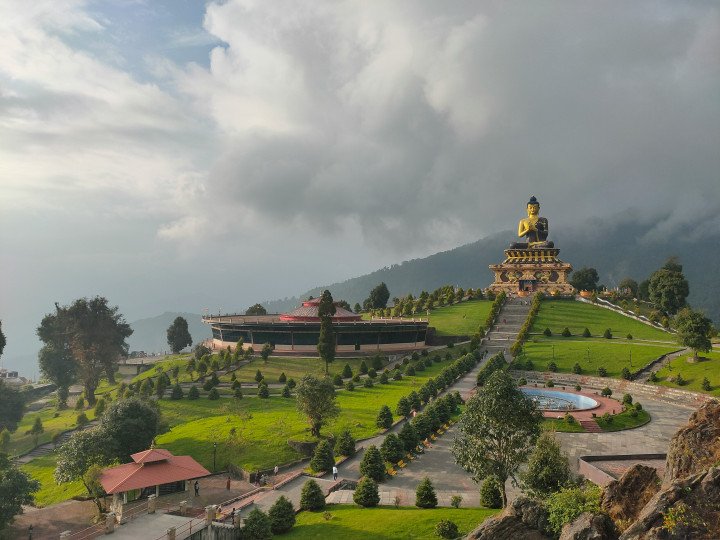
Buddha Park (Tathagata Tsal): The town's main attraction, with landscaped grounds and a monumental Buddha statue. 1.5-2 hrs. The entry fee is around ₹50 as per the latest visitor information, but timings and charges are best verified locally.
Ralong Monastery: A significant monastic complex; it’s best to visit quietly and not treat prayer areas as photography sets. Always get permission before photographing people or interiors.
Rayong Sunrise Viewpoint: Only worth considering if the forecast is clear. A predawn start is pointless with heavy cloud.
Choose Ravangla for the mountain views, the monasteries, a quieter evening, and access to nature walks.
Maenam Wildlife Sanctuary: for fit walkers, not checklist tourism
The Maenam trail ascends through the forest from the Ravangla side and requires an early start, proper shoes, water, and realistic fitness. The walk can take most of a day. You need forest permission. Local guidance might be mandatory under current rules. Before heading out, organise entry through the forest office or an authorised local operator.
Do not add this walk on the departure day. Avoid it in heavy rain; don’t rely on old online fee info.
Borong and nearby villages: for travellers who want less to do
Borong and the villages around Ravangla are best for homestays, local food, birdlife and unhurried walks. It is not a list of attractions, dense though it may be. That is why many travellers come here - the limited mobile coverage, menus, and room amenities.
Where to stay in South Sikkim
The highest-rated hotel isn’t always the best hotel. The decorative room is less important than location, road access, hot water, heating, food availability, and driver accommodation.
Budget stays: approximately ₹900–₹2,000 per room
Look for homestays, family-run lodges and basic hotels near the market in Namchi or the taxi stand in Ravangla. Backpackers and travellers who prefer clean basics to views will like this range. Please confirm the attached bathroom, the hot water hours, the stairs, and whether taxes are included.
Mid-range stays: approximately ₹2,000–₹4,500 per room
This class usually has better bedding, food available in-house, reliable hot water, and easier vehicle access. The current traveller shortlists include properties like Banari Regency by Summit or Dungmali Heritage Resort in Namchi, and Buddha Retreat, Lingmoo Residency, or The Barfung Retreat near Ravangla. Examples to compare, not approvals without reservation. The booking decision is based on the latest reviews and the final price.
Premium and experience stays: approximately ₹4,500–₹10,000-plus
If the property is part of the trip, it makes sense to pay a little more. Cherry Resort and The Temi Bungalow are frequently thought of in terms of the tea-estate atmosphere around Temi. Larger rooms, views, and more facilities are available at premium resorts around Namchi. Look carefully at meal plans; you may need a vehicle elsewhere to eat.
Choose the location before the hotel
What and where to eat: By budget
South Sikkim’s everyday food is often better than a hotel buffet. Look for momos, thukpa or gyathuk, thenthuk, sha phaley, dal-bhat-tarkari, sel roti, churpi preparations, gundruk and seasonal greens. Availability varies, and some traditional dishes need to be pre-ordered at homestays.
Budget traveller: ₹350–₹600 per person a day
A simple breakfast, local lunch, and momos or thukpa for dinner can fit into this range. The best value is often found in small restaurants near Namchi market and the taxi stands. A basic local meal will cost you Rs 100-250.
Comfort budget: ₹700–₹1,200 per person a day
This means café stops, better restaurants, and a mix of local, Indian, and Chinese-style dishes. For a sit-down meal, expect around ₹250-₹500 per person, excluding alcohol.
Hotel and premium dining: ₹1,500-plus per person a day
Resorts and remote properties cost more because supplies have to travel farther and there are fewer options. A full hotel meal costs ₹500–₹1,000+ per person. You can get a breakfast and dinner meal plan cheaper than ordering separately in Temi, Borong, and other village areas.
Tips for planning food:
Inform homestays of vegetarian food, allergies, and dietary restrictions before arrival.
Not all kitchens serve late, so don’t assume you can order dinner late.
Even if a digital payment is advertised, save cash for small eateries and village shops.
Use bottled or properly filtered water for drinking.
If you mind the preparation time of meat dishes, enquire before ordering.
Try some local food, but do so with respect: “spicy” and “hot” don’t mean the same thing everywhere.
South Sikkim permits: what you need and what you do not
When South, East, and North Sikkim regulations are combined, permit advice becomes unclear. Maintain the divisions between the categories.
Indian citizens on the standard South Sikkim circuit
Indian tourists normally do not need a general entry permit for Namchi, Temi, Ravangla, Ralong, or normal village stays. Please bring an original government-issued photo ID, as this is required by hotels, checkpoints, forest offices and transport providers.
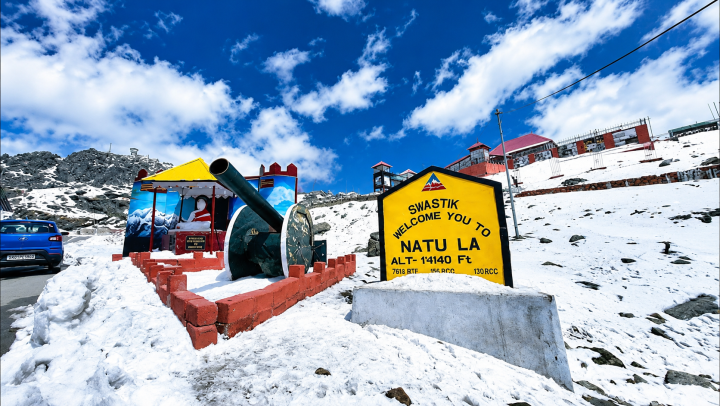
If your trip later includes protected areas such as Nathula, Tsomgo Lake, or parts of North Sikkim, you may need to get a separate Protected Area Permit. Just because you are in South Sikkim does not mean those rules do not apply. Don’t assume Aadhaar will be accepted for protected area applications. Carry a voter ID, driving licence or passport, and the documents required for children.
Foreign nationals
Foreign nationals need a Restricted Area Permit (RAP) to enter Sikkim, apart from holding a valid passport and Indian visa. Standard documentation includes copies of your passport and visa and recent passport-size photographs. Sikkim has shifted the foreign permit clearance online; travelers should start at the official e-FRRO/permit channel and reconfirm the current process with Sikkim Tourism before traveling.
Having a RAP does not mean that all protected border areas are open. Separate Protected Area Permit rules and nationality-specific restrictions may apply. Foreign travelers should not arrange a tight itinerary around a restricted destination until written clearance is confirmed.
Forest and trekking permission
The Maenam Wildlife Sanctuary is a different story. Entry or trekking permission needs to be arranged from the relevant forest authority, and a guide may be required. Ravangla: Collect your ID, start early, and get the latest information. Entry into South Sikkim is not equal to permission to trek inside a wildlife sanctuary.
Ready-to-use South Sikkim itineraries
Option 1: 2 nights/3 days [The fast circuit]
Ideal for: Weekend visitors, couples, and those combining South Sikkim with Darjeeling or Pelling.
Day 1: NJP/Bagdogra or Darjeeling to Namchi; evening at Central Park and the market.
Day 2: Siddhesvara Dham, Samdruptse and Ngadak Monastery. Drive to Ravangla. If time permits, visit Buddha Park.
Day 3: Ralong Monastery or morning walk in Ravangla; drive to NJP/Bagdogra, Gangtok or Pelling.
Not comfortable, but doable. Do not add Temi unless the departure is late and the road plan is confirmed.
Option 2: 3 nights/4 days [The best first trip]
Ideal for: first-time visitors, families, and travelers looking for variety but not wanting to change hotels every day.
Day 1: Arrive in Namchi, relax and explore the town.
Day 2: Sightseeing at Namchi Siddhesvara Dham, Samdruptse and Ngadak Monastery.
Day 3: Namchi to Temi Tea Garden and on to Ravangla. Tea walk or tea factory visit, subject to availability.
Day 4: Buddha Park & Ralong Monastery. Depart from here.
If you want more mountain atmosphere than town convenience, spend one night at Namchi and two at Ravangla. Reverse that split for seniors or travelers who want more restaurant choices.
Option 3: 4 nights/5 days [The slow South Sikkim route]
Ideal for: Active travellers and those who want South Sikkim to be the holiday, not a transit route.
2 nights in Namchi, 1 in Temi, and 2 in Ravangla or Borong. Spend the extra full day on the Maenam trek (with permission and a guide) or a slower village experience. Do not try to do both on the same day.
A realistic South Sikkim budget
This estimate is based on sharing a room and vehicle for a 3Night/4Day trip from NJP or Bagdogra.
Airfare or long-distance train fare not included. Solo travelers pay more for a private itinerary as they don’t share the cost of the vehicle. A family of four may pay less per person than a couple, but will be riding in a bigger vehicle.
Common South Sikkim planning mistakes
Gangtok is a compulsory gateway. Can add several hours of driving, and not necessary if only going to South Sikkim.
Staying in a different hotel every night. The map is dense. The roads are not. Two-night bases mean less packing and make the itinerary less vulnerable to delays.
Compare cab prices without comparing inclusions. A lower quote may not include parking, waiting, driver allowance, or sightseeing detours.
Guaranteed experiences, mountain viewpoints planned in the monsoon. The landscape is beautiful, but distant views depend on the weather.
Giving senior citizens a hotel with lots of stairs. Check out the lift access, distance from the road to the reception, bathroom grip, heating, and number of steps.
Leave permit questions until arrival. For foreigners and for extensions of protected areas, this is especially dangerous.
Monasteries and temples as photo studios. Dress conservatively, keep voices low, and ask before taking photos of interiors, ceremonies, or people.
What to pack
Government Photo ID and Booking Copies (Printed or Digital)
Not a heavy garment, but layers
Waterproof jacket or umbrella, especially from May through September
Grip shoes for wet paths and monastery steps
Personal medication and travel sickness medication on medical advice
Power bank and offline copies of important contacts
Water bottle (reusable)
Cash, small amount
SPF, sunglasses, and a basic day pack
Network coverage is generally better in Namchi and Ravangla than in the remote pockets of villages, but it should not be taken for granted. Download maps & booking details before leaving the hotel.
Why choose Tripjyada for a South Sikkim tour?
South Sikkim is one of the most underrated. The permit load is lighter than in the north, but a good trip still depends on picking the right entry route, matching the vehicle to the group, booking a stay with practical access, and leaving enough time between hill sectors.
Tripjyada consolidates those individual decisions into a single feasible plan. The itinerary can be customized to suit the arrival point, group size, pace, budget, and interests, rather than forcing all travelers onto the same Gangtok-led circuit.
Opt for Tripjyada when you want:
A customized route covering Namchi, Temi, Ravangla, and surrounding villages
One point of co-ordination for transfers, stays, and sightseeing
Check clear vehicle and hotel inclusions
Provide advice on permits if the itinerary involves regulated areas.
Options for couples, families, seniors, and groups
Trip support if weather/road conditions warrant a realistic change
It’s not about putting in more stops. It is not driving unnecessarily, not having uncertain costs, and not having late decisions.
Planning a vacation in South Sikkim? Contact Tripjyada for a route and quotation according to your dates, arrival point, number of travelers, and preferred hotel category.