- 1 North Sikkim at a Glance
- 2 What Is Open in North Sikkim Right Now?
- 3 Getting There: North Sikkim Begins in Gangtok
- 4 The North Sikkim Vehicle Hierarchy: What You Are Actually Booking
- 5 Permit Purgatory, Solved
- 6 North Sikkim Tourist Places to Visit
- 7 Where to Sleep After All That Driving
- 8 Eating Your Way Through North Sikkim
- 9 When to Go
- 10 Pick Your North Sikkim Adventure
- 11 Altitude: Take It Seriously
- 12 What to Pack
- 13 Why Choose Tripjyada for North Sikkim?
- 14 Final Word
North Sikkim is a place where an itinerary stops being a loss and turns into a negotiation, with altitude, permits, weather, and roads that can change overnight. That is why the most dangerous sentence in an advertisement for a North Sikkim tour is “Everything is open”.
For much of the past year, Lachen, which is considered the gateway to Gurudongmar Lake, has been restricted for tourists because of repeated floods, landslides, and bridge damage, which disrupted the Chungthang-Lachen axis. It re-emerged briefly on the tourism map in March 2026. A new breach in April led to another closure and a big evacuation. Subsequent infrastructure work restored physical connectivity, and government permit reforms continued to include Lachen and Gurudongmar. But a repaired bridge, a destination in a rate chart, and an actively issued tourist permit are three different things.
So this guide begins with the only responsible planning position for August 2026. That might sound cautious. Caution is not pessimism in North Sikkim. It's logistics with a memory.
This Sikkim travel guide covers the logistics, transport, permits, budget, and how to build a North Sikkim itinerary that can survive the mountain's edits.
North Sikkim at a Glance
What Is Open in North Sikkim Right Now?
North Sikkim is such a place that it should never be sold with a permanent “open” or "closed" label. Access is axis-specific.
The Lachen Closure: What Actually Happened
When the glacial lake outburst flood took place in October 2023, it severely damaged roads and bridges in North Sikkim. Then, repeatedly, weather-related calamities continued to disrupt the Lachen axis. In early April, another road break took place near the Taram Chu section where more than a thousand tourists where starnaded, and then the administration evacuated the travellers and closed the axis again.
By August, the government officials discussed restoring connectivity, new permit systems, and establishing new destination rate charts that will include Lachen and Gurudongma. This acted as a positive signal, but unfortunately does not act as a standing promise that every tourist will be able to obtain a permit.
For the readers, the correct language is:
Lachen faces prolonged and continuous closures.
The reopening in March 2026 did not give year-round stability.
There should be no payment for a guaranteed Lachen Gurudongmar departure until an authorised local operator confirms.
Every quotation with a Lachen must involve a written alternative route and refund/adjustment policy.
A level of precision for a tour operator operating in North Sikkim always works best for travellers, as well as for operators and Google, rather than an article that can become false after the next rainstorm.
Getting There: North Sikkim Begins in Gangtok
As there are no direct flights, trains, or public intercity buses that take tourists from Delhi, Kolkata, or Mumbai to Lachung. The entire journey takes place in stages.
Land at Bagdogra Airport or New Jalpaiguri railway station
Take a road trip to Gangtok
Halt in Gangtok while your tour operator finalises the permit and vehicle for North Sikkim
Leave for North Sikkim the next morning on the approved route.
If you are trying to skip, Gangtok is usually a false economy. It removes the buffer needed for delays, document corrections, and permit processing.
By Air
Bagdogra Airport is the most preferred air gateway for most travellers. It is situated about 124 km away from Gangtok, and it takes four to five hours and sometimes can even more.
Although Pakyong Airport is much closer to Gangtok, Sikkim's weather is extremely sensitive, and there are very few aircraft schedules. It is better not to depart around a connection that leaves no recovery time.
By Train
New Jalpaiguri is the major rail gateway. Most travellers touch down at NJP and continue to Gangtok by shared or reserved cars. Sikkim has no operational passenger railway station of its own as of now.
Bagdogra/NJP to Gangtok: Transport Choices
Try to reach Gangtok by afternoon if possible, and have a late-night arrival followed by 6 am. As the North Sikkim departure is not efficient, it is simply two tiring journeys placed beside each other.
The North Sikkim Vehicle Hierarchy: What You Are Actually Booking
Don't you ever choose to book a vehicle from any stock photographs if you are travelling to North Sikkim. Factors like terrain, weather, group size, and the permit system all influence the allocation.
Cars Commonly Used
A compact hatchback might be a favorable option for Gangtok or Bagdogra transfer, but they are not a good idea for rough, high-altitude North Sikkim routes. Your tour operator should allocate you a vehicle that should suit the current terrain and include all the details in the permit process.
What “Ten-Seater” Really Means
Make it clear that any vehicle’s legal or advertised capacity is not a comfortable tourist capacity. Nine adults, ten winter jackets, nine backpackers, and three hard suitcases do not disappear because the vehicle has a final row.
If it is a long day:
Two travellers can choose a private Ertiga/Innova for comfort.
Four to five adults can fit in a private MUV.
Large groups should consider two vehicles instead of filling every seat.
Shared trips are suitable for travellers with soft luggage and flexible expectations.
Indicative North Sikkim Package Prices
The prices rise during the peak months, festivals, sudden reopenings, and periods when fewer vehicles are operating. The rates can also change under the government’s evolving online permit and rate framework.
What to Check Before Paying?
Is it a Lachung just package or a Lachen promise too?
Is zero point included or charged on the road?
What specific model or class of car is booked?
How many people will be in it?
Are all meals covered? From which meal to which meal?
Is room heating provided, paid separately, or not available?
Should the permit be denied or the route closed:
Will the operator add a night in Dzongu, Pelling, or an extra night in Gangtok?
Is the reimbursement for the complete package or only for the unused services?
Note: The words “subject to weather” shouldn’t be used to hide the absence of a real cancellation policy.
Permit Purgatory, Solved
As you might have already known, North Sikkim is a protected area, so its permit is linked to the traveller, route, date, registered operator, vehicle, and driver. You can also not hire a taxi and negotiate entry at a checkpoint.
Indian Travellers
As per the government, here are some guidelines for the following protected area:
Indian passport, voter ID, driving license, or any other accepted government document
Birth certificate for a minor
Two passport-size photographs
Photocopies, with the original carried during travel
Do not rely on Aadhaar alone. According to the Sikkim government's guidance, it is not accepted as proof of citizenship/nationality for PAP processing.
Foreign Travellers
If you are a foreign national, you will require the appropriate Restricted Area Permit for Sikkim and a separate Protected Area Permit for approved North Sikkim routes. Applications are put through a Sikkim Tourism-registered agent for groups of two or more, along with a certified guide. OCI holders follow foreign national rules.
How to Get the Permit
In order to obtain any permit required to travel in this region, you need to:
Finalise the operating route with a registered Sikkim operator
Send accepted IDs and photographs
The operator submits traveller, vehicle, and driver details
Carry the permit copies and original ID through checkpoints
You need to apply at least one day ahead, and earlier in the peak season. A permit should not override a later closure caused by weather or road damage.
North Sikkim Tourist Places to Visit
Lachung
Lachung, at around 8,600 feet, is the overnight base for Yumthang. A slower tour can include its monastery and a walk through a village.
Yumthang Valley
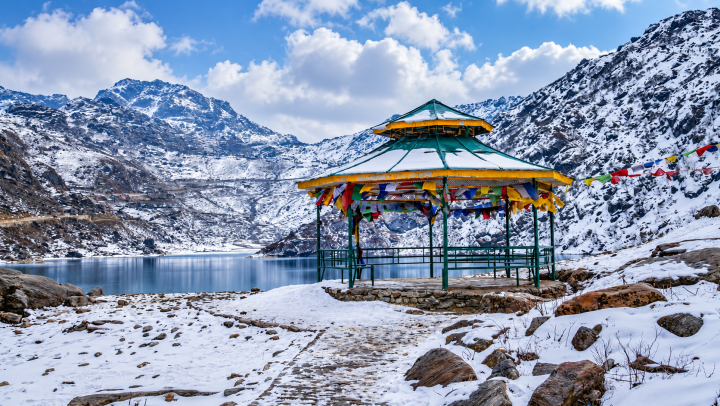
Yumthang (11,800 feet) is associated with the Shingba Rhododendron Sanctuary. Flowers and snow are not guaranteed, but seasonal.
Zero Point/Yumesamdong
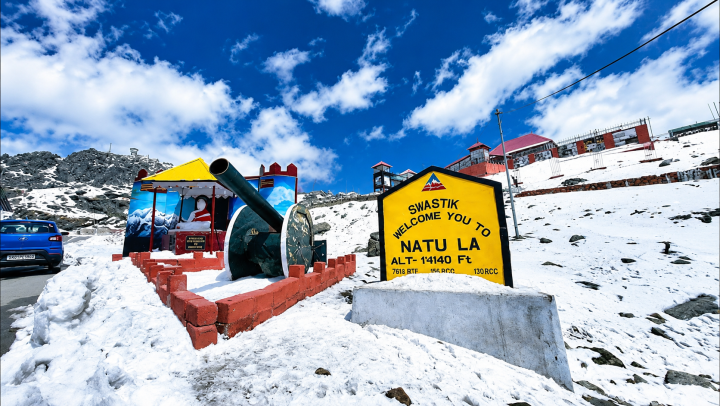
Beyond Yumthang lies Zero Point. Often, there is an additional cost and the risk of closure due to weather, snow, or security instructions. Make it a choice for vulnerable travelers.
Chungthang and Mangan
Chungthang is the point where the Lachen and Lachung roads diverge. Mangan, the district headquarters, is a useful lower-altitude top.
Dzongu
You can walk through forests and villages and stay in homestays in Dzongu, a protected Lepcha reserve. A special license is required.
Lachen and Gurudongmar
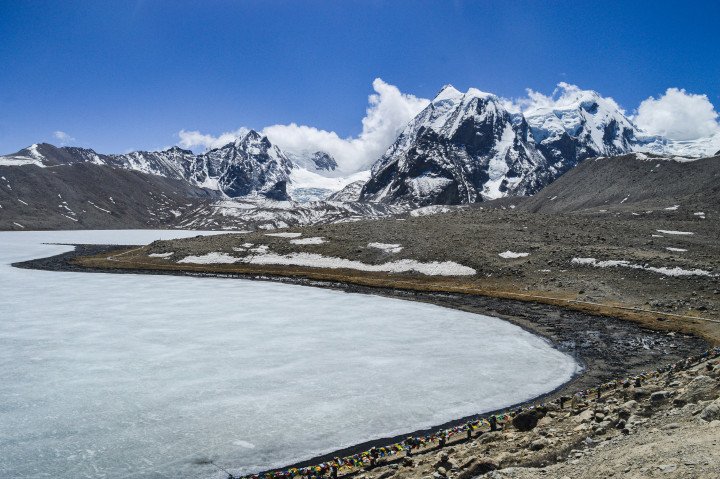
Lachen is traditionally the base for Gurudongmar Lake. Tourist access is unstable, so only include after current permits and road access are confirmed. Don’t schedule a non-refundable trip on this circuit.
Where to Sleep After All That Driving
Spend a night in Gangtok and then proceed north. Choose a hotel with convenient vehicle access, luggage storage, an early breakfast, and a lift if you’re traveling with seniors.
Lachung accommodation is normally included in the package. Don’t expect Gangtok-type facilities; only simple rooms run locally.
Ask if hot water, room heating, backup power, and extra bedding are included. Do not book a Lachen hotel on its own if you are not sure if you can get there, an online booking does not mean you can get there.
Eating Your Way Through North Sikkim
Meals are usually included in the package, as restaurant options are limited to less than Mangan Rice, dal, vegetables, noodles, thukpa, momos, eggs, and simple packed meals are to be expected.
Vegetarian food is easy to identify. Jain travellers should not declare any onion/garlic, root vegetables, and egg requirements before departure. Vegans should watch out for milk, butter, egg, and meat stock. Ask tripjyada to mention the dietary requirements in the operating voucher and not after reaching Lachung.
When to Go
Snow is nice until you can’t get down the road. Choose a season for access, not just pictures.
Pick Your North Sikkim Adventure
Option 1: Standard Lachung: 1 Night/2 Days
Best for a short leave: an efficient Sikkim trip itinerary, though it means two long days on the road.
Altitude: Take It Seriously
Lachun is nested at around 8,600 feet, Yumthang is about 11,800 feet, and Zero Point is higher. Altitude sickness can even affect fit travellers too.
Symptoms include headache, nausea, dizziness, fatigue, loss of appetite, and vomiting. »If symptoms worsen, do not continue climbing. Any confusion, loss of coordination, or severe breathlessness at rest requires urgent medical attention and descent.
Sleep in Gangtok and then go north.
Don't drink alcohol before going to altitude.
Eat lightly, drink normally, forced water is no cure.
Report symptoms immediately to your health care provider.
Never self-medicate on casual advice.
If you are pregnant, nursing, have health problems, or are taking medication, consult with your health professional.
What to Pack
ID accepted, photocopies, and passport photos
Certificate of birth of a minor
Waterproof jacket and thermal layers
Warm gloves, socks, hat, and shoes with grip
Sunscreen, sunglasses, and lip balm
First aid and personal medicine
Power bank, cash, and soft bag
Refillable water bottle, light refreshments
After Mangan, service becomes unreliable. Download permits and vouchers before you leave. Pay in cash as UPI is signal-dependent. Sikkim also has single-use plastic restrictions, so bring a refillable bottle and take your waste home with you.
Why Choose Tripjyada for North Sikkim?
The hotel, vehicle, permit, and route have to go together in North Sikkim. Tripjyada can assist with:
Current Route Verification: Know what is running before you sell it.
Permit coordination: Process documents with accepted, approved vehicle & driver details
Suitable vehicles: Choose a vehicle that suits your group size, your luggage, and your comfort.
Practical hotels: heating, hot water, stairs, and bedding.
Diet planning: Short hotel explanations of vegetarian, Jain, or vegan food.
Written alternatives: Prepare a replacement and a price adjustment if the route is closed.
On-ground support: Coordination of changes due to weather or road conditions.
The mountains are no operator. The benefit is one team when the mountains change the plan to take the journey.
Final Word
The best North Sikkim itinerary is not the one with the most names. It’s the one where altitude, weather, or a checkpoint can take one away, and it still feels like a holiday.
Select the route according to present accessibility, the vehicle according to real comfort, and the highest point according to health. North Sikkim will take care of the scenery.