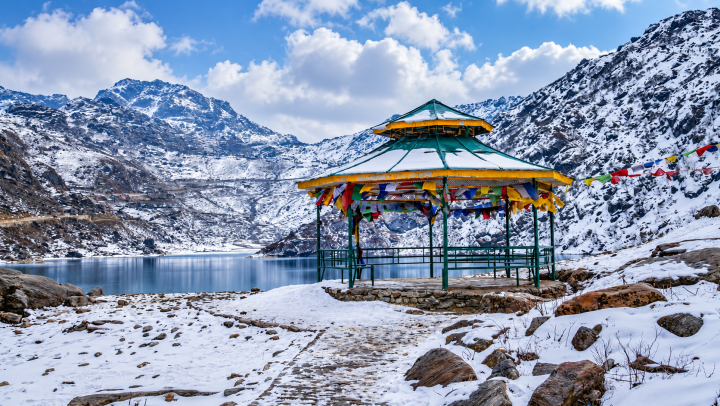
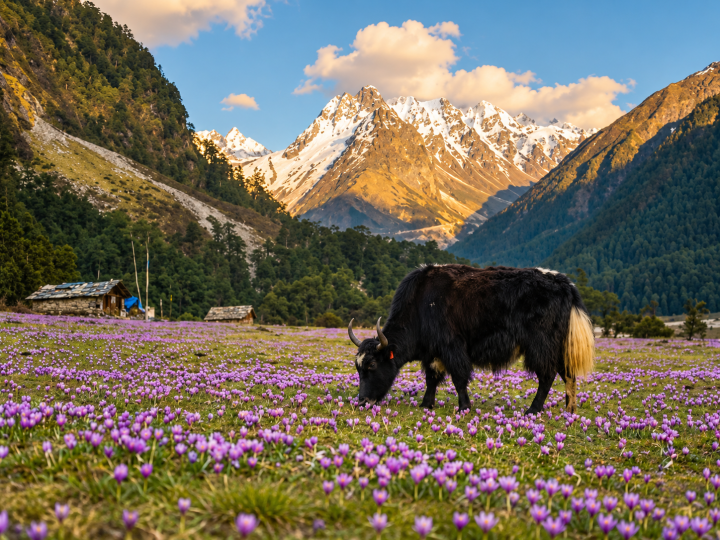
Yumthang Valley is one of the most beautiful places in North Sikkim, located in the high mountains. The valley is surrounded by snowy peaks, alpine meadows, rushing rivers, and a riot of seasonal flowers; the sort of scenery that makes you stop, take about 47 photographs, and then realise you have been staring at the mountains for ten minutes.
Yumthang is famously known as the Yumthang Valley of Flowers of Sikkim and is situated at an altitude of around 11,800 feet. It is usually visited as part of a North Sikkim itinerary with Lachung as the base. The journey itself is an important part of the experience, taking travellers through dramatic mountain landscapes, forests and high altitude terrain.
Planning your first trip to Sikkim or looking for a quieter Himalayan escape, Yumthang deserves a place on your itinerary.
Yumthang Valley at a Glance
Why Visit Yumthang Valley?
Yumthang is a place where the landscape does most of the talking. The valley is surrounded by towering peaks of the Himalayas and vast open meadows, and the dramatic scenery is further enhanced by the Teesta river system and its tributaries.
Yumthang is not like some of the other tourist spots in Sikkim where you feel you are in a city; here you feel you are engulfed by nature. Here, there are no busy shopping streets, no endless café menus. Instead, you get mountain air, winding roads, wild flowers and a dramatically seasonal landscape.
The valley is also famous for its seasonal blooms. In spring, the meadows explode into a riot of colourful blooms, and it is this spectacular scenery that gave Yumthang its famous nickname.
Meanwhile, winter can turn the valley into a snowy wonderland.
Yumthang Valley of Flowers: Why Is It So Special?
The Yumthang Valley of Flowers is particularly popular during the flowering season, when the meadows around are filled with colourful Himalayan flora.
Rhododendrons are one of the most recognisable flowers in the region, with other seasonal alpine plants adding pink, red, yellow, and purple shades to the landscape.
The flowering period is usually in spring and early summer, but the exact timing can be affected by weather conditions and altitude.
This is one of the best times of year for photographers to visit. For the rest of us, it’s a good excuse to stand in a meadow and pretend you’ve accidentally walked into a postcard.
Top Highlights around Yumthang
The distance from Lachung to Yumthang Valley
By road is approximately 25 km, but the travel time may vary depending on road conditions, weather, traffic, and local restrictions.
Visitors travelling to Yumthang generally stay overnight at Lachung. Most travellers leave early in the morning to enjoy the valley before returning to Lachung.
The road itself is part of the journey. You will pass mountain landscapes, forests, and parts where the scenery changes according to the altitude.
Travel times are approximate and can vary significantly depending on snowfall, road conditions, weather, and permit-related restrictions.
Shingba Rhododendron Sanctuary
One of the major attractions near Yumthang is the Shingba Rhododendron Sanctuary, which is famous for its impressive collection of species of rhododendrons.
The sanctuary is a riot of colour during the flowering season, and spring is especially attractive to nature lovers and photographers.
The dramatic backdrop to the colourful vegetation is provided by the surrounding mountains. Outside the main flowering period, the scenery is still beautiful, with forests, streams and high-altitude meadows offering many opportunities for photography.
Visitors should remember this is a protected natural area, so refrain from picking flowers, disturbing wildlife, or leaving waste behind.
Hot Springs of Yumthang Area
Another interesting stop during a North Sikkim trip is the hot springs near Yumthang.
Traditionally thought to have therapeutic qualities, the naturally warm water has long been associated with local beliefs and practices. Close to the riverbanks are hot springs that can provide a stark contrast to the cold mountain environment.
But facilities and accessibility can vary, so don't expect a luxury spa experience in the middle of the Himalayas. This is nature doing its thing. Not a five-star wellness retreat.
Extension to High Altitudes: The Zero Point
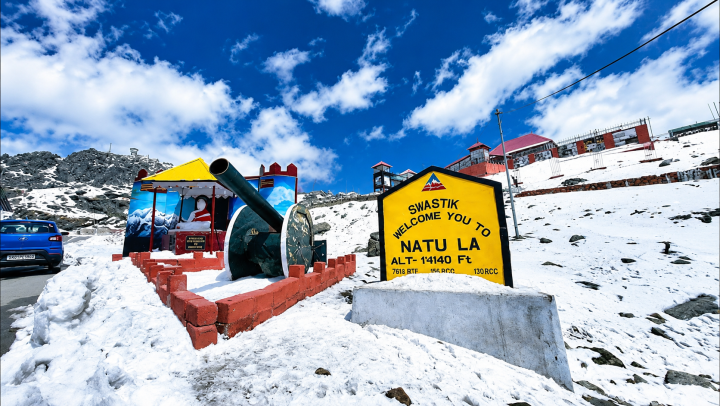
For many travellers, Yumthang is only part of the adventure. The trail can proceed to Zero Point or Yumesamdong, a raised area near the international border.
The distance from Yumthang Valley to Zero Point is about 23-25 km by road. Zero Point is at a much higher altitude than Yumthang and is famous for its snow-clad landscape.
Depending on the season and road conditions, visitors may see snow on the mountain and roads surrounding it. In winter, the area can be deep in snow, and even in other seasons there may be patches of snow.
Zero Point is in a sensitive border area, and access is controlled, with visitors required to follow the conditions of their permits.
How the trip works from Gangtok to Yumthang Valley
Gangtok to Yumthang Valley is not a short drive, so most travellers do not attempt it as a simple day trip.
The usual way is to travel from Gangtok towards North Sikkim, staying overnight in Lachung and then visiting Yumthang the next day.
A typical journey:
Gangtok → Mangan → Chungthang → Lachung → Yumthang Valley → Zero Point
The roads are mountainous, and travel times are very much weather and road conditions. The route also has considerable variation in altitude, and so a gradual journey with an overnight stay in Lachung is more comfortable for most of the travellers.
How to Reach Yumthang Valley?
Yumthang does not have an airport or rail station, so the valley is mainly accessible by road.
Generally, travellers fly to Sikkim through Bagdogra Airport or New Jalpaiguri Railway Station and then proceed to Gangtok. From Gangtok, the journey moves further north to Lachung and then to Yumthang.
Yumthang is in a protected area, so travellers need to have a permit and usually only go there with an authorised travel operator.
Current Sikkim Tourism guidance states that tourists must stay within the areas specified in their permits, with permits for the Lachung, Yumthang and Zero Point routes issued at least one day in advance.
Best Time to Visit Yumthang Valley
The best time to visit Yumthang Valley largely depends on whether you are looking for flowers, clear mountain views, or snow.
1. March-May: Flowers and Picturesque Landscapes
Spring is one of the best times of the year to visit Yumthang. As the temperature rises, the valley gradually becomes green, and flowers appear all over the meadows.
The rhododendron blooms make this a very popular time with photographers and nature lovers.
2. June: A Change of Colours
Early summer can still be very nice with flowers and reasonably decent conditions. But the weather in the mountains can change quickly, so visitors should be prepared for rain and cloudy weather.
3. Monsoon - July - September
Heavy rain and difficult road conditions can be experienced in parts of Sikkim during monsoon. Travel can sometimes be affected by landslides and road closures, so to be safe, flexibility is important during this time.
4. October to November: Views of the Mountains
Autumn is also a great time for Himalayan scenery. Skies may be clearer, and you may get better views of surrounding mountains.
5. December - February - Snow Season
Heavy snow in winter makes for a different kind of Yumthang experience altogether. The valley can be spectacular under a blanket of white, but access may be difficult depending on weather and road conditions.
Where to Stay for a Yumthang Valley Trip
Lachung is where most people stay as there is very little accommodation directly around Yumthang.
Lachung has hotels, guesthouses and homestays to suit different budgets. From here, you can also more easily start the early-morning trip to Yumthang.
North Sikkim is a popular seasonal destination; thus, it is advisable to book accommodation in advance, especially during flowering and snowfall seasons.
Things to Carry for Yumthang Valley
Though the weather in Gangtok may be comfortable, you should be prepared for cold as Yumthang is at a high altitude.
Pack warm layers, gloves, wool socks, a waterproof jacket, sunglasses and sunscreen. Sunglasses are more than just an accessory for photos — snow glare can be surprisingly bright.
It is also useful to bring snacks, water, basic medicines and enough cash.
Take the altitude seriously and don’t rush the itinerary if you’re travelling with children or older family members. Allow your body to adjust and follow local advice.
Important Travel Tips for Yumthang Valley
Before travelling, check the latest road conditions and permit requirements, as access to the mountains can change rapidly.
Do not litter or damage flowers or vegetation. The Yumthang beauty depends on the protection of its fragile high-altitude environment.
Leave room to change your plans. A sunny morning in the mountains can sometimes turn into fog or snowfall with very little warning.
And finally, listen to your driver or local guide. They know the roads, the weather patterns, and conditions far better than a navigation app sitting comfortably on your phone.
Reasons To Include Yumthang Valley In Your Sikkim Itinerary
A visit to Yumthang Valley is not a quick sightseeing stop. It is a journey through some of the most spectacular landscapes in North Sikkim, from the forests and mountain roads of Lachung to colourful alpine meadows and snow-covered peaks.
If you are visiting in the rhododendron season, or coming to see the valley covered in snow, or simply love the dramatic scenery of the Himalayas, Yumthang is sure to provide a memorable experience for nature lovers and first-time visitors.
If conditions and permits allow, add Zero Point and stay overnight in Lachung. Keep your warm clothes close by and allow yourself plenty of time to enjoy the journey.
The best thing about a trip to the Himalayas isn’t always the destination. It’s the view out of the car window, and the occasional “Wow” every five minutes or so.
Yumthang Valley is famous for its colourful seasonal flowers, alpine meadows, snow-covered mountains and beautiful high-altitude scenery. Located at approximately 11,800 feet, it is popularly known as Sikkim’s Valley of Flowers.
March to May is generally the best time to see rhododendrons and other seasonal flowers. October and November usually offer clearer mountain views, while December to February may provide snow. Winter access depends on snowfall, weather and road conditions.
Yes. Yumthang Valley is located within a protected region of North Sikkim, so visitors require the appropriate permit. Permits are generally arranged through an authorised local travel operator and remain subject to government approval and current regulations.
Most travellers follow the Gangtok–Mangan–Chungthang–Lachung route and stay overnight in Lachung. They then visit Yumthang Valley the following morning. A direct day trip from Gangtok is generally unsuitable because of the long distance, mountain roads and considerable change in altitude.
Yumthang Valley is approximately 25 kilometres from Lachung. The journey generally takes around one to two hours, although travel time can vary according to traffic, snowfall, weather, road conditions and local restrictions.
Zero Point, also called Yumesamdong, is approximately 23–25 kilometres beyond Yumthang Valley and may be added to the excursion. Access depends on permits, weather and road conditions, and additional vehicle charges may apply.