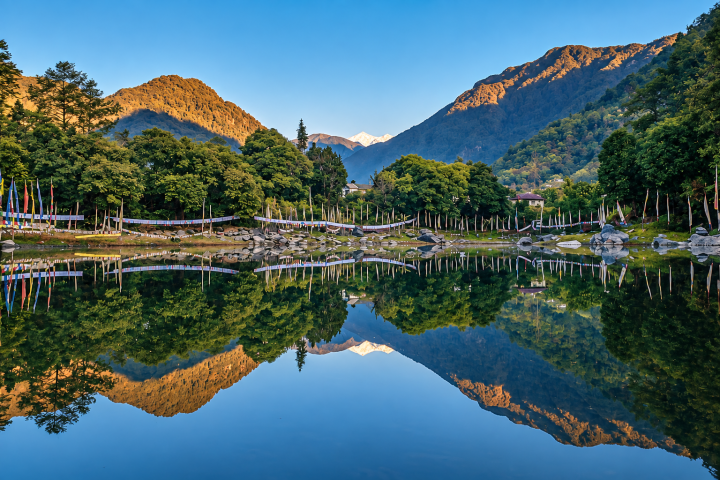
Yuksom, Sikkim, is a peaceful mountain village surrounded by forests and the hills of West Sikkim. As the first capital of Sikkim, it holds great historical importance, with the historic Norbugang Coronation Site marking the crowning of Phuntsog Namgyal as Sikkim’s first Chogyal in 1642.
Quieter than Gangtok and Pelling, Yuksom is ideal for travellers interested in monasteries, local culture, nature walks and Himalayan views. It is also an important starting point for Yuksom trekking routes to Dzongri and Goechala, making it a great base for both cultural exploration and mountain adventures.
Yuksom at a Glance
Distances and travel times may be affected by road and route conditions.
Why Come to Yuksom?
Unlike the more touristy towns of Sikkim, Yuksom offers a different experience. Its main draw is its historical significance, but the surrounding forests, monasteries and trekking routes also appeal to nature and adventure lovers.
It is also the gateway to the Khangchendzonga region and various high-altitude trekking routes. The government tourism portal describes Yuksom as the starting point for some of the region's most fascinating mountain treks, including the route towards Dzongri.
For slow travellers, a couple of days here gives the opportunity to see the heritage sites, walk the forest trails and experience village life, rather than just stopping for a few hours.
Best Time to Visit Yuksom
The best time to visit Yuksom depends on whether you are interested in sightseeing, pleasant weather, or trekking.
1. March through May
Spring is one of the most beautiful seasons in Yuksom. The weather is nice, the forests are turning green, and flowers are coming out. This is also a popular season for trekking in Sikkim, especially for those who want to see the rhododendrons and go on mountain trails.
2. June through September
Sikkim receives heavy monsoon rains. Roads can be slippery, and landslides can obstruct travel routes. Trekking conditions can be difficult. If what you are mainly interested in is sightseeing, it is generally better to choose another season.
3. October to November
Autumn is one of the best times to go to Yuksom, Sikkim. The monsoon is a great time for mountain views and trekking as the skies tend to be clearer.
4. December through February
Winter is colder, and higher trekking routes can be tricky. However, during this time of year the village is quieter and may appeal to travellers seeking a peaceful Himalayan escape.
Climate of Yuksom
The Yuksom weather remains relatively cool throughout the year because of its elevation and surrounding forests. Temperatures can differ significantly between day and night, especially in winter.
For trekking, always check local conditions before departure because weather at higher elevations can be considerably colder and more unpredictable than in Yuksom village.
Best Places to Visit in Yuksom
There are many places of historical and cultural importance to visit in the surrounding area of the village.
1. Coronation Throne and Norbugang Chorten
Arguably the most important historic attraction in Yuksom is Norbugang. 1642 saw the crowning of Phuntsog Namgyal crowned the first Chogyal of Sikkim.
The throne for the coronation is made of stone and is considered sacred. The throne also has a footprint attributed to Lhatsun Chenpo that visitors can see.
The place is surrounded by trees and has a peaceful atmosphere. It is a good place to understand the historical roots of Sikkim.
2. Dubdi Gompa
Another important attraction is Dubdi Monastery, which is about 2 km uphill from Yuksom. It is believed to be one of the oldest monasteries in Sikkim, and was established in the early history of the Sikkimese Buddhist tradition. The monastery is surrounded by woods, and it is an uphill walk to get there.
The walk is part of the experience. If you plan on exploring the trails around the area, wear comfortable shoes.
3. Lake Kathok
Kathok Lake (spelled Karthok or Kartok by some) is a small sacred water body connected to the religious heritage of Yuksom. It's quiet location makes it a natural fit on a Yuksom sightseeing itinerary.
You can also combine a trip to the lake with the Norbugang area and see several attractions on foot.
4. Kathok Monastery
Another religious place that visitors can visit around Yuksom is Kathok Monastery. The monastery and its forest surroundings give a taste of the area’s Buddhist traditions.
5. Khangchendzonga National Park
Yuksom is an important gateway to the Khangchendzonga landscape and trekking trails. The forests, mountain scenery, and high altitude trails make the region very attractive for adventure travellers and nature lovers.
If you are planning to trek in protected areas, ensure that you have the necessary permits and use proper local trekking arrangements.
Yuksom Hiking
Yuksom trekking is one of the main reasons why the village is popular with adventure travellers. Yuksom is the launching pad for some of Sikkim’s most renowned high-altitude treks, including trails to Dzongri and Goechala.
The Goechala route is very popular with trekkers who want to see the Khangchendzonga range. These are not easy day hikes, however. Trekking at high altitudes needs preparation, proper equipment, permits, and acclimatisation.
If a multi-day trek is not what you are looking for, you can also explore shorter trails around the village, like the walk to Dubdi Monastery.
Popular trekking options from Yuksom
Operators and routes will have different itineraries and trekking distances. Check trail conditions and permit requirements before you set off.
Distance from Pelling to Yuksom
The distance from Pelling to Yuksom is around 33-40 km depending on route and exact starting point. Under good road conditions, the trip usually takes about 1.5-2 hours. Government tourism information puts Yuksom about 33 km from Pelling.
Yuksom is an easy addition to a West Sikkim travel plan.
If you are based out of Pelling, you can do a day trip to Yuksom or stay for a night or two in the village. If you want to experience the quieter side of Yuksom or plan to start a trek, then an overnight stay is a better option.
How to get to Yuksom?
By aeroplane:
For most travellers, the nearest major airport is Bagdogra Airport in West Bengal. From the airport, you can proceed toward Yuksom by road.
Another choice is the Pakyong Airport near Gangtok, although flight availability can be limited compared with Bagdogra.
By Train:
The nearest major railway station is New Jalpaiguri Railway Station. Travellers can take private taxis or shared transport from NJP toward West Sikkim.
By Road:
Yuksom can be most conveniently reached by road. Shared taxis and private cabs are available connecting the village to places like Gyalshing and Pelling. The Sikkim Tourism Department also says shared taxis are available from Pelling and Gyalshing.
Where to Stay in Yuksom
Accommodation in Yuksom is generally less luxurious and more local than in larger tourist centers like Gangtok or Pelling. You will find hotels, lodges, trekkers' accommodation, and village stays.
If you are eager to try local Sikkimese food and village life, then a Yuksom homestay is an especially good option to consider. The administration of West Sikkim district specifically says tourists can stay with local families by choosing village homestays.
The prices shown are indicative only and may vary depending on season, type of accommodation, and availability.
Where to eat in Yuksom
Food in Yuksom is mostly simple and comforting, with influences from Sikkimese and Himalayan food. Depending on your accommodation, you can get dishes like momos, thukpa, noodles, rice-based meals, and local preparations.
If you want to sample some home-cooked food, a homestay can be especially good. If you are trekking, inform your accommodation or trek operator of your food preferences
How Many Days Are Sufficient for Yuksom?
A quick historical visit to Norbugang, Kathok Lake and Dubdi Monastery requires only one night.
However, two nights allow you more time to explore the village at a leisurely pace and possibly see nearby attractions.
The length of time for trekkers is entirely dependent on the route taken. Yuksom is often used as the base for multi-day Dzongri and Goechala itineraries.
Suggested 2-Day Yuksom Itinerary
If you are combining Yuksom with Pelling, you can travel from Pelling to Yuksom in the morning and visit the main attractions and either return to Pelling or stay the night.
Yuksom Travel Tips
A little preparation can make your Yuksom trip much more comfortable, especially if you plan to explore its forest trails or go trekking. Keep these practical tips in mind before you travel.
1. Wear comfortable walking shoes as several attractions involve walking uphill or through the forest.
2. Take a light jacket with you at all times, even in the summer months.
3. Carry rain protection, particularly if travelling during or around the monsoon.
4. Book your Yuksom homestay/hotel well in advance during the peak autumn and trekking seasons.
5. Arrange permits and trekking support in advance for high-altitude trekking. Don’t underestimate the difficulty of the Dzongri or the Goechala routes.
6. Follow the monastery rules and do not disturb religious ceremonies.
7. Bring cash as smaller village shops might not have good digital payment options.
8. Do not litter, especially on forest trails and sacred sites.
Why Yuksom Should Be on Your Travel List
Yuksom, Sikkim, is more than just a base for Himalayan trekking. Its historical importance, peaceful forests, monasteries, and traditional village atmosphere make it one of the most interesting destinations in West Sikkim.
Yuksom caters to different kinds of travellers, be it exploring the historic Norbugang Coronation Throne, walking up to Dubdi Monastery, enjoying a traditional homestay, or starting an adventure to Dzongri or Goechala.
If you are already planning a trip to Pelling, the short distance to Yuksom from Pelling makes the village an easy addition to your itinerary. For those looking for a slower and more culturally immersive Sikkim experience, spending at least one or two nights here is well worth it.
Yuksom is famous for being the first capital of Sikkim and the site where Phuntsog Namgyal was crowned the first Chogyal of Sikkim in 1642. It is also known for historic monasteries, peaceful forests and trekking routes to Dzongri and Goechala.
The best places to visit in Yuksom include the Norbugang Coronation Throne, Norbugang Chorten, Dubdi Monastery, Kathok Lake and Kathok Monastery. The village also serves as an important gateway to Khangchendzonga National Park.
March to May and October to November are generally the best times to visit Yuksom. Spring offers pleasant weather, greenery and rhododendron blooms, while autumn usually provides clearer skies for sightseeing and trekking. Monsoon travel can be affected by heavy rainfall, landslides and difficult road conditions.
One to three nights are sufficient for a sightseeing trip to Yuksom. A two-day stay allows travellers to explore Norbugang, Kathok Lake, Dubdi Monastery and the village at a comfortable pace. Those planning the Dzongri or Goechala trek will require several additional days.
Yuksom is approximately 33–40 kilometres from Pelling, depending on the route and exact starting point. The journey usually takes around 1.5 to 2 hours under favourable road conditions, making Yuksom suitable for an overnight stay or a day trip from Pelling.
Permits and authorised trekking arrangements may be required for routes entering Khangchendzonga National Park and other protected areas. Trekkers should confirm the latest rules, arrange necessary documents and check weather and trail conditions before beginning the Dzongri or Goechala trek.