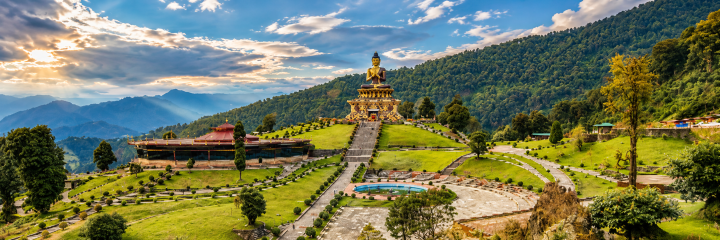
Ravangla in South Sikkim sits at around 7,000 feet and is surrounded by forests, villages, and stunning Himalayan views. Located between Tendong Hills and Maenam, it offers views of peaks such as Pandim, Kabru, Kanchenjunga, and Sinjolchu.
Unlike busier destinations in Sikkim, Ravangla is perfect for a slower holiday. You can explore monasteries, villages, tea gardens, and viewpoints or simply relax in the mountains. Its location also makes it a convenient stop between [Namchi tourist places], Gangtok, and Pelling.
Quick Facts About Ravangla
Reasons to Visit Ravangla
Ravangla is the ideal destination for all the travellers who actually want to experience the quieter side of Sikkim. It is a town that combines Himalayan scenery with traditional villages, Buddhist cultures, and outdoor activities.
The best attraction is the Buddha Park, which is also known as Tathagata Tsal. The park features a 130-foot Buddha statue and has become the most recognisable landmark in South Sikkim.
Ravangla has also become a starting point for trekking towards Maenam and even the surrounding forests. The villages nearby offer opportunities for experiencing local Sikkimese culture, while monasteries named Ralong provide insight into the region’s Buddhist heritage.
Some of the Top Places for Ravangla Sightseeing
There are more Ravangla sightseeing options than just the Buddha Park. There are several attractions near the town that can be covered over the course of 2 to 3 days.
1. Buddha Park
The most famous attraction in Ravangla is the Buddha Park. It is also known as Tathagata Tsal. The park was developed as part of Sikkim’s Buddhist pilgrimage circuit, and it features a 130-foot statue of the lord Gautama Buddha.
There is also a complex that includes a meditation hall, a Buddhist conclave, and a museum. With its peaceful surroundings and Himalayan backdrop, it is one of the best places to begin your Ravangla sightseeing experience.
2. Ralong Monastery
Ravangla Monastery is also known as Ralong Monastery, which is an important Buddhist site that is located around 13km from the place Ravangla. The monastery is actually associated with the Karma Kagyu tradition, which is known for its distinctive architecture and religious significance. The landscape that surrounds it is equally impressive, with forested hills creating a peaceful setting. And if you are interested in Sikkim’s Buddhist heritage, Ralong Monastery deserves a place on your itinerary.
3. Bon Monastery
It is located near Kewzing. The Bon Monastery, or Bon Yung Dung Monastery, provides an opportunity to learn about the Bon tradition of Tibetan spirituality. In 1980, the monastery was established and contains religious paintings, images of Buddhist deities, and artefacts.
4. Rayong Sunrise View Point
It is located around 8 km from Ravangla on the road towards Rayong Sunrise View Point and Damthang, which is known for its spectacular views of the Himalayan peaks illuminated by the first rays of the sun. In the clear mornings, it’s rewarding.
5. Ralong Hot Springs
The locals call it Ralong Cha Chu, also known as Ralong Hot Springs, is a natural sulphur spring near the place called Ravangla. Due to its surrounding mountain scenery and warm water, it makes it an interesting addition to a South Sikkim itinerary.
6. Temi Tea Garden
The place called Temi Tea Garden is another popular attraction that is included in the Ravangla trip. It is located in the surrounding South Sikkim landscape; the tea estate is known for its rolling green slopes and a mountain setting, which is scenic.
A visit to this place combines beautifully landscaped tea plantations with the best opportunity to experience Sikkim’s best-known agricultural products.
7. Kewzing Village
Kewzing is a traditional Sikkimese village near Ravangla where visitors experience the local architecture, surrounding natural landscape, and village life. Also, it's the best area for birdwatching and exploring rural Sikkim from the main tourist centres.
Best Time for You To Visit Ravangla
The weather in Ravangla changes throughout the year, which means choosing the right season helps you to make a significant difference to your trip.
March to May: the most pleasant period to visit is springtime. The weather is much more comfortable, as the landscape becomes greener and flowers begin to bloom across the hills. And the months of April and May are attractive for people who love to take photos and for nature lovers.
June to September: These are the months that coincide with the monsoon. Ravangla can experience frequent rains, difficult road conditions, and reduced mountain visibility. With the heavy rainfall, it can also affect any travel plans. Especially for trekking and sightseeing, it is not the most convenient season.
October to December: The autumn season is the best time to visit Ravangla. The skies are mostly clear, making it easy to enjoy Himalayan views, while the weather remains suitable for outdoor activities and even sightseeing.
January to February: The winter season brings the coldest temperatures and crisp mountain air. The higher areas can become very chilly, so travellers should pack an adequate amount of winter clothing. The clear days can still provide excellent mountain views.
Things You Can Do in Ravangla
Beyond sightseeing, Ravangla offers you several experiences for travellers.
2-Day Itinerary Plan for Ravangla
If you think you have only 2 days, an itinerary plan can cover the main highlights without making the trip rushed.
Day 1: You can arrive in Ravangla, check into your hotel, and visit the Buddha Park. Then later, you can explore the local markets and even enjoy the mountain atmosphere.
Day 2: Make sure you start early to visit Rayong Sunrise View Point. Then continue to make your way towards Ralong Monastery and even Ralong Hot Springs. If time permits, you can visit the Kewzing Village or include the Temi Tea Garden before you continue to your next destination.
If you want a more relaxed experience, then staying for 3 days and 2 nights gives you more time for the village visits, nearby attractions, and even trekking. If you are extending your Sikkim trip, you can also explore [Yuksom Sikkim] for its monasteries, scenic surroundings, and trekking routes.
Tips for Travelling to Ravangla
A little preparation can make your Ravangla trip more comfortable and enjoyable. Keep these simple travel tips in mind before exploring the town, nearby villages, monasteries, and mountain attractions.
Do carry warm layers throughout the year, especially during evenings and mornings.
You can keep a rain jacket or even an umbrella handy as mountain weather can change very quickly.
Do wear some comfortable shoes if you plan on exploring monasteries or even trekking.
You can start with sightseeing for a better chance of clear Himalayan views.
Keep some cash on hand while you travel your way to the villages or any remote areas.
As the mountain roads can be winding, you can allow some extra travel time between the destinations.
Respect the local customs while you visit the monasteries and any religious sites.
You can avoid littering and carry reusable water bottles when possible.
Before travelling, check the latest information from [Sikkim Tourism], especially for local travel guidelines, permits, and conditions that may affect your itinerary.
Make Ravangla, Sikkim, Your Next Mountain Escape
Ravangla, Sikkim, is the destination for all the travellers who want to experience the quieter and more scenic side of the Himalayas. From visiting the Buddha statue at the Buddha Park and the most peaceful atmosphere of the Ralong Monastery to the sunrise views, forest trails, tea gardens, and traditional villages, the town itself offers a balanced mix of culture, nature, and relaxation.
The location is convenient, which makes it an excellent stop between other popular destinations in Sikkim. If you are planning a short getaway or a longer Himalayan road trip, Ravangla gives you an opportunity to slow down, explore at your own pace, and enjoy the true beauty of South Sikkim.
Ravangla is famous for its peaceful Himalayan setting, Buddhist monasteries, traditional villages and panoramic mountain views. Its best-known attraction is Buddha Park, also called Tathagata Tsal, which features a magnificent 130-foot statue of Gautama Buddha.
The best places to visit in and around Ravangla include Buddha Park, Ralong Monastery, Bon Monastery, Rayong Sunrise Viewpoint, Ralong Hot Springs, Temi Tea Garden, and Kewzing Village.
March to May and October to December are generally the best periods to visit Ravangla. Spring offers pleasant weather and blooming landscapes, while autumn usually provides clearer skies and better Himalayan views. Monsoon travel can be affected by heavy rainfall and difficult road conditions.
Two to three days are sufficient to explore Ravangla’s major attractions. A two-day itinerary can cover Buddha Park, Rayong Sunrise Viewpoint, Ralong Monastery and nearby places, while a three-day stay allows more time for villages, tea gardens and nature walks.
Travellers can reach Ravangla by road from Bagdogra Airport or New Jalpaiguri Railway Station. Taxis are also available from Gangtok, Namchi and Pelling. Travel time may vary depending on traffic, weather and mountain-road conditions.
Yes. Ravangla can be conveniently combined with Namchi, Temi Tea Garden, Pelling and Gangtok. Its location in South Sikkim makes it a suitable stop for travellers planning a longer Sikkim itinerary.