- 1 Lachung at a Glance
- 2 Is Laching Open Right Now? (September 2026 Status)
- 3 How to Reach Lachung
- 4 Lachung’s Transport System
- 5 Permits for Lachung
- 6 Where to Stay in Lachung
- 7 Places to Visit in Lachung
- 8 Weather in Lachung by Month
- 9 What and Where to Eat in Lachung
- 10 Which Lachung Trip Fits You?
- 11 A Realistic Lachung Budget
- 12 Lachung Itinerary Options
- 13 Common Mistakes Travellers Make With Lachung
- 14 Why Choose Tripjyada for Lachung
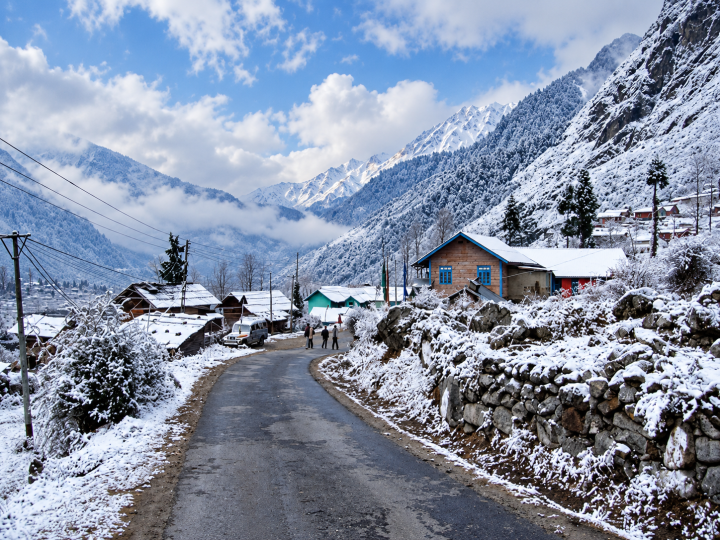
Lachung, Sikkim. Lachung is a small Dzumsa-governed village at 8,600 feet in North Sikkim. It is the base for two of Sikkim’s most photographed landscapes: Yumthang Valley, the Valley of Flowers, and Zero Point, a snowline viewpoint at 15,000 feet. The settlement and river-cut canyon of Lachung are worth visiting before heading off to Yumthang and Zero Point. As of September 2026, Lachung and Lachen branch off the same junction town of Chungthang but have unique permit zones, road conditions, and dependability.
Lachung and its roadways to Yumthang Valley and Zero Point were reopened to tourists in September 2025 and have remained stable after the October 2023 glacial lake outburst flood shut Lachen. Sikkim is prone to snowfalls, landslides, and army restrictions on access at Zero Point and Katao. Trips to Lachung are more regularly planned than trips to Lachen. Tripjyada’s guide has real distances, month-wise weather, permits, places to stay, altitude, and cold-friendly routes.
Lachung at a Glance
Is Laching Open Right Now? (September 2026 Status)
Lachung is now the more reliable element of the Lachen-Lachung combo, but "more reliable" is not "guaranteed," and it's worth knowing why the two towns have parted ways.
Both of these roads pass through or near Chungthang, and consequently, the October 2023 glacial lake outburst flood hit Lachen and Lachung. Tourism in Lachung, Yumthang Valley, and Zero Point in North Sikkim commenced in September 2025. Lachen fork was delayed till March 2026 and did not reopen cleanly. As of early September 2026, Lachung is still open as usual for tourist permits. The latest source for this guide (dated September 1, 2026) shows the broader North Sikkim road network open for local and tourist traffic, noting that Zero Point is still at the mercy of the army and weather clearance on any given day, and Katao is still far more restricted throughout the year.
In practice, book Lachung and Yumthang Valley for sure, but consider Zero Point as a weather-dependent add-on and don’t assume Katao access until your operator confirms it for your dates. You still get short buffer days on Lachung itineraries, with no hint of difficulty.
How to Reach Lachung
As with Lachen, there is no way to reach Lachung without going through Gangtok. All trips go through Bagdogra or New Jalpaiguri (NJP), then Gangtok, then north through Chungthang.
Lachung’s Transport System
No independent driving to Lachung is allowed. Any vehicle travelling north of Chungthang must have a driver registered in Sikkim and must be travelling under a Protected Area Permit for a specific traveller, vehicle, route, and date with a valid North Sikkim beat permit. The vehicles are usually changed at Gangtok as the onward vehicle, driver, and permit papers have to match before the first check post.
Shared jeep services from Gangtok to Lachung are more frequent than the equivalent Lachen services, reflecting the steadier flow of tourists to Lachung, but most travellers still book a private vehicle for the combined Lachen-Lachung loop, rather than mixing shared and private legs mid-trip. Standard SUVs (Sumo, Bolero, Scorpio, Xylo) are used throughout; from Lachung, a separate shared or hired vehicle usually continues to Yumthang Valley and Zero Point, as not all vehicle types or drivers are cleared for the higher stretch.
Permits for Lachung
Lachung is in a Protected Area, just like Lachen, so the Protected Area Permit (PAP) here is mandatory and can't be arranged by yourself at a checkpoint.
The PAP is to be arranged by a registered Sikkim tour operator on behalf of the traveller. The operator submits identification, photographs, and vehicle/driver details to the Sikkim Tourism Department. Processing usually takes one to two working days, and physical copies of the permit must be collected before departure, as checkpoints north of Chungthang don’t have internet access to verify digital copies.
Indicative PAP costs for 2026 are about ₹450 total per Indian traveller (permit processing, entry fee, and environmental levy) and about ₹950 for foreign nationals. Think of these as planning figures to confirm with your operator, not fixed government rates.
Foreign nationals can obtain a permit for Lachung Village and Yumthang Valley, but Zero Point and Katao are meant for Indian citizens only, as they are near the international border. Both towns have the Chungthang checkpoint, and most operators include Lachung and Yumthang in the same permit application as Lachen.
Carry your ID and photos in physical form, not just on a phone screen or saved PDF, as checkpoint staff often request paper copies.
Where to Stay in Lachung
Lachung has a more extensive and stable hotel infrastructure than Lachen, indicative of the more consistent influx of tourists. Hotel Lachung Continental is a well-known standard-to-premium property in the village center, while Yarlam Resort Lachung is a frequently recommended premium option with strong reviews for its rooms and mountain outlook. As with any accommodation in North Sikkim, ask specifically about heating (often billed separately), hot-water hours, and current operating status before finalising a booking, and treat online listings as a starting point for questions rather than a confirmed reservation until your operator has matched it to your permit.
Places to Visit in Lachung
Lachung Village.
Like Lachen, the village of Lachung is administered by the traditional Dzumsa council system led by an elected headman (Pipon) who runs the local affairs. Lachung Monastery (Lachung Gompa), built in 1880 and belonging to the Nyingma order, situated above the village with views over the Lachung River valley, is worth a 20-30 minute visit on arrival or departure day. A pleasant short walk is along the Lachung River itself, a tributary which eventually joins the Teesta near Chungthang.
Yumthang Valley
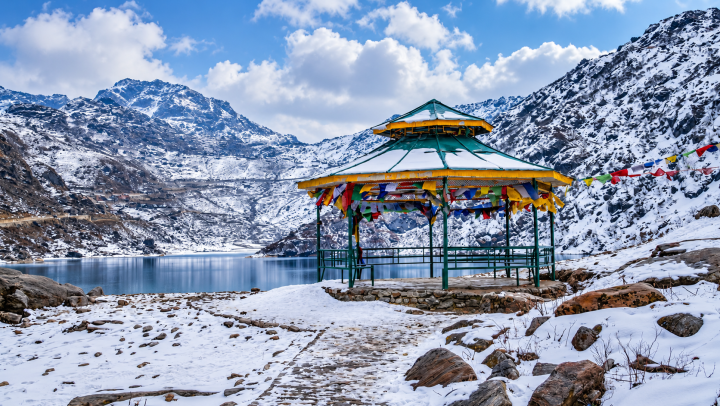
Yumthang Valley, around 27 km and 1.5 hours from Lachung, is the main reason that most of the people will stay in Lachung. The Valley of Flowers is most spectacular from late March through May, when rhododendrons blanket the valley floor, but the wide alpine meadow, hot springs, and river views are worth the trip in most seasons. At the entrance to the valley, there is a rest stop and a small market selling warm clothing and snacks for the underprepared in the event that the temperature drops.
Zero Point (Yumesamdong)
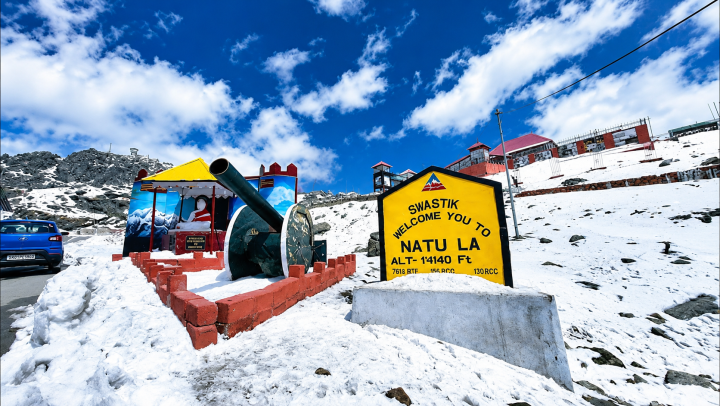
Zero Point, also known as Yumesamdong, is located about 22 km beyond Yumthang Valley at around 15,400 ft, right on the edge of permitted civilian access near the Chinese border. It is covered with snow most of the year and is open to Indian nationals only – foreign travellers are stopped at the Yumthang Valley. Access is subject to daily army and weather clearances, so a Zero Point add-on should be viewed as a hopeful extension to your Yumthang day, not a firm booking.
Katao
The Katao Lachung route is about 26 km and about 144 km from Gangtok, near the international border, at about 15,000 ft, and remains snow-covered most of the year. It is far more restricted than Zero Point – no foreigner is allowed to go there at all; even Indian nationals require special, current clearance, which is not guaranteed on any particular day. Check with your operator well in advance of your visit to see if Katao is realistically open; many itineraries simply don’t include it given the unpredictability.
Don't plan to visit Yumthang Valley or Zero Point on the day you arrive in Lachung – altitude, road conditions, and permit processing all suggest you should first settle in.
Weather in Lachung by Month
Lachung is in a tundra-influenced climate zone, and Lachung weather and Lachung temperature fluctuate greatly throughout the year. This is one of the most searched aspects of planning a trip here, and for good reason, as the right clothing and the right season really do make a difference to how comfortable the Yumthang and Zero Point excursions feel. Conditions can change in a day at this altitude, so it’s worth checking Lachung weather today before you leave Gangtok, rather than relying on the seasonal averages below. It’ll take two minutes.
The table below indicates typical monthly ranges rather than the actual temperature in Lachung on any one day – use it as a guide to determine what to pack and when to travel, and check live conditions with your operator closer to your travel date.
Given the approximately 6,800-foot elevation gain from Lachung to Zero Point, the Zero Point Lachung temperature today and conditions generally run several degrees colder than the village itself. Be prepared for winter conditions at Zero Point even when visiting Lachung in what feels like a mild month lower down. Annual precipitation across the wider Lachung area reaches about 3,000mm, concentrated heavily in the July–August window, which is also when road disruption risk peaks.
What and Where to Eat in Lachung
Food in Lachung is simple, warming, and mostly bundled into your accommodation package, since independent restaurant choice is limited at this altitude. Think rice, dal, seasonal vegetables, noodles, thukpa, momos, eggs, and hot soups, which are really welcome given the coldness of Lachung evenings outside the summer months.
Vegetarian food is easy to arrange; Jain and vegan travelers should flag requirements before arrival, as substitution options thin out further from Gangtok. For the Yumthang and Zero Point trip, most operators or homestays provide a simple hot lunch or snacks, as there is little food infrastructure at either site.
Which Lachung Trip Fits You?
A Realistic Lachung Budget
Based on a typical two-night stay in Lachung within a broader North Sikkim vacation, all rates are per person, twin-sharing, and indicative planning ranges.
Lachung Itinerary Options
Option 1: Lachung Essential (2 Nights / 3 Days from Gangtok)
Option 2: Lachen-Lachung Loop (3 Nights / 4 Days from Gangtok)
Option 3: Relaxed North Sikkim with Buffer (4 nights / 5 days from Gangtok)
Common Mistakes Travellers Make With Lachung
The most frequent error is to underestimate the cold in Yumthang Valley, particularly Zero Point. While Zero Point, which is about 6,800 feet higher, experiences temperatures well below freezing for much of the year, Lachung village itself can feel mild. Regardless of the season, bring real insulated layers rather than a light jacket.
Other recurrent problems include assuming that access to Zero Point or Katao is guaranteed once you arrive in Lachung (both depend on daily army and weather clearance), assuming that foreign nationals can reach Zero Point or Katao (they cannot—Yumthang Valley is the limit), planning an additional flight for the same day as the Gangtok return, and depending on mobile signal north of Chungthang, which is essentially nonexistent.
Why Choose Tripjyada for Lachung
A trip to Lachung planned around the altitude and the season, rather than a fixed idea of what the trip should look like, will reward the traveler. Tripjyada directly monitors current access to Yumthang Valley and Zero Point with registered operators, so we can set realistic expectations before you commit to dates rather than after.
We manage the PAP application through a registered Sikkim operator, cater to the actual needs of the vehicles and drivers for both the Lachung and onward Yumthang/Zero Point legs, and build a reasonable buffer into all itineraries so that a single closed day at Zero Point does not spoil the rest of your North Sikkim trip.
If you are planning a trip to North Sikkim and looking for an honest read on what is realistically possible at Lachung, Yumthang Valley, and Zero Point for your dates, reach out to Tripjyada before you book anything else around it.
Yes, Lachung, Yumthang Valley and Zero Point (weather and army clearance permitting) have been open to tourists since reopening in September 2025, and remain open as of September 2026. Katao is still much more limited.
It is around 125-130 km, but it usually takes about 5-6 hours of road travel through Chungthang. However, it may take longer as there are some single-lane sections of construction.
The distance between Lachen and Lachung and vise versa is about 55-60 km through Chungthang, and it takes about 3 hours. Most itineraries combine both towns in one permit.
Yumthang Valley is 27 km from Lachung, 1.5 hours each way. Yumthang Valley is followed by another 22 km stretch to Zero Point, which is at an elevation of about 15,400 feet.
The altitude of Lachung is roughly 8600 feet. Temperatures average around -9°C to -1°C in January and around 7-11°C in July and August; Zero Point, much higher, is much colder throughout the year.
Nope. Foreign nationals can visit Lachung village and Yumthang Valley, but Zero Point and Katao are only accessible to Indian citizens.
Lachung has a more stable hotel base than Lachen, ranging from homestays to well-reviewed properties such as Hotel Lachung Continental and Yarlam Resort. Please check current rates and operating status with your operator before booking.
No. "Lachung La" (also known as Lachung La Pass) is a different high mountain pass in Ladakh, on the Manali-Leh highway, and is not related to Lachung village in North Sikkim. Travelers researching Lachung should ignore search results about this Ladakh pass.