- 1 Gangtok at a Glance
- 2 Is Gangtok the Right Base for Your Sikkim Trip?
- 3 How to Reach Gangtok
- 4 Gangtok’s Transport System
- 5 Permit and Documents
- 6 Where to Stay in Gangtok
- 7 Places to Visit - and How Long They Actually Need
- 8 Days Trips from Gangtok
- 9 What and Where to Eat
- 10 Best Time to Visit Gangtok
- 11 Which Gangtok Trip Fits You?
- 12 Realistic Gangtok Trip Budget
- 13 Gangtok Itinerary Options
- 14 Mistakes Travellers Commonly Make
- 15 Why Choose Tripjyada for Gangtok
Most people who plan a Sikkim trip put Gangtok in one of three boxes: a hill station worth visiting on its own, a stop every itinerary includes, or a simple junction for Tsomgo Lake and Nathula. None of this perspective about Gangtok is quite right, and treating it that way is how most itineraries end up busy without actually working.
Gangtok is the state capital and the main transport and permit hub for East and North Sikkim, a comfortable base for two to four nights, though whether it deserves that many or should anchor your whole trip depends on what else you plan to cover. If a couple is doing only Gangtok and Tsomgo Lake, they need a totally different plan from a family combining it with North Sikkim and Darjeeling.
This guide from Tripjyada will walk you through the real planning decisions, how to get there, where to stay, what permits actually involve, which signals are worth the time, and how to build an itinerary that does not waste your time at day in traffic.
Gangtok at a Glance
Is Gangtok the Right Base for Your Sikkim Trip?
If you are a first-time visitor, then yes, Gangtok is the practical base for East Sikkim sightseeing and the starting point for North Sikkim permits and vehicles. If your trip includes Tsomgo Lake, Nathula, or a Lachen/Lachung loop, you will need to stage from Gangtok anyhow, so basing yourself here for those days is more logical than being optional.
Where it stops making sense is exactly when it is added purely out of habit. A couple doing only West Sikkim (Pelling, Yuksom) or South Sikkim (Ravangla, Namchi) does not require a stopover at Gangtok if your route through it from NJP or Bagdogra adds a detour rather than saving time. In that case, Ravangla or Pelling is the more direct base, and Gangtok can be skipped or reduced to one night in passing.
For a rough guide, allow 2 nights for Gangtok-only sightseeing, 3 nights if you want to add Tsomgo Lake and Nathula, and 4 if North Sikkim is part of the same trip and you want a buffer for the road conditions.
How to Reach Gangtok
As Gangtok has no railway station, there are also no commercial flights of its own, as Pakyong Airport, which is 30 km away, has seen airline services start and stop more than once since 2018, so it should not be built into your plan as a guaranteed option. Both Bagdogra Airport and NJP railway station are around 124-125 km away, but they remain the dependable gateways, followed by a 4-4.5-hour journey.
And that road time is a floor, not a ceiling. The actual length of traffic between Sevoke and Rangpo is significantly greater than the kilometer count alone. Monsoon landslides clearance, fog, and how many pauses you make. The same 125 km might take anything from 4 to 7 hours because of the hilly roads.
There is a seasonal helicopter service available between Bagdogra and Gangtok, which operates for around 35 minutes, but it runs subject to weather, demand, and government scheduling.
Gangtok’s Transport System
In Gangtok, there are taxis than operated through registered local unions, which shapes how you move around more than most guides mention. If you book a taxi for your Bagdogra-Gangtok transfer, it usually won’t simply continue to Tsogmo or Nathula the next day. If the excursion is in a protected area, you will generally need vehicles registered to that route, so a vehicle change is normal, not a sign of a bad operator.
If you're looking for something within the city, shared taxis are the budget backbone, and some local routes, it generally operate from fixed stands like Deroali rather than your hotel door. Their price is a fraction of a private taxi if you are a couple or a solo traveler with fixed departure times. When it comes to families or groups with luggage, a private vehicle for the day is usually worth the difference.
MG Marg itself is a pedestrian-only attraction in Gangtok, with no vehicles, including taxis, so any hotel on MG Marg still means a short walk from where the car stops. A hatchback or sedan works for couples, an Ertiga or Innova for families and small groups, and if there are any senior citizens present, then a more comfortable, higher SUV with easier entry and exit is required.
Permit and Documents
If you are an Indian citizen, there is no special permit you need to enter Sikkim or for Ordinary Gangtok sightseeing. A government photo ID (passport, voter ID, or driving license) or Aadhaar is not always accepted at the hotels. Foreign nationals, they require an Inner Line Permit (ILP), as the entire state falls under restricted area provisions. It is issued free at Rangpo/Melli check posts, Bagdogra airport, NJP, or in advance from Sikkim tourism offices, and it holds a validation of 30 days and is also extendable in Gangtok.
In Tsomgo Lake and Baba Mandir, you need another Protected Area Permit (PAP) for both Indian and foreign nationals, as they are in a border-adjacent area. You can avail it from your hotel or a registered agent along with the excursion booking, which usually needs a day’s notice. Carry ID copies and passport photographs; carry originals too, since checkpoints do verify them.
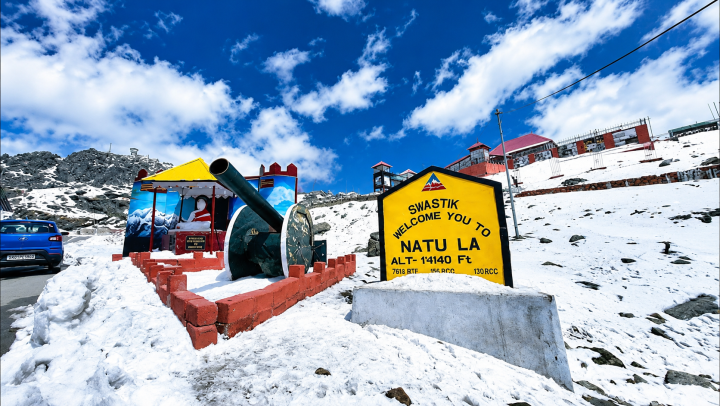
The permits for Nathula go only to Indian citizens, not to foreign nationals. They are not permitted beyond Tsogmo Lake and Baba Mandir on this route. Nathula remains closed to tourists on Mondays and Tuesdays, and access on any day depends on the army, external factors like weather, and road conditions; no agent can guarantee it will be open. A backup plan for that day is quite sensible but not pessimistic.
North Sikkim routes (Lachen, Lachen, Yumthang) need their own PAP, arranged similarly, and are covered in Tripjyada’s North Sikkim guide rather than here.
Where to Stay in Gangtok
Gangtok is constructed on a ridge, and this is more important for hotel choosing than photographs in the listings would suggest. Many houses, even good ones, are accessed by a flight of stairs from the road, from a handful to over a hundred, since the structure is either below or above street level. If you are a senior citizen or have a lot of luggage, ask about the taxi access to the entrance, the number of steps, and whether or not a lift is available.
Hot-water schedules (usually just morning and evening outside of the premium hotels), heater charges (sometimes billed separately in winter), and real view categories are rarely mentioned on booking sites. A "mountain view" room can mean a clear view of Kanchenjunga or a partial view between buildings, so ask for a photo of the actual room before paying for the view.
Places to Visit - and How Long They Actually Need
City and Monastery Circuit (Half Day)
The pedestrian square at the center of town, MG Marg, is worth an unhurried hour or two for cafes, shopping, and watching the town – it suits every traveler type on a level, paved stretch. Enchey Monastery (20-30 minutes) is a short drive above town and naturally combines with Ganesh Tok and Hanuman Tok, two viewpoints on the same ridge road that together take about an hour; Tashi View Point, best attempted early morning, adds Kanchenjunga views on a clear day, though clarity is never guaranteed and is best treated as a bonus.
Culture and Ropeway Circuit (Half Day)
Good for travelers interested in Tibetan Buddhist history, the Namgyal Institute of Tibetology (30-45 minutes) and nearby Do Drul Chorten are easy walks. The Gangtok Ropeway from Deorali to Tashiling gives a short aerial view of the town (30–40 minutes, including queuing, which can be long in peak season) and fits well with the Directorate of Handicrafts and Handloom. This circuit is more suitable for seniors and children than the steeper viewpoint circuit.
What Looks Convenient on a Map but isn’t
The Namgyal Institute of Tibetology (30-45 minutes) and nearby Do Drul Chorten are good, easy walks for travelers interested in Tibetan Buddhist history. The Gangtok Ropeway from Deorali to Tashiling gives a quick bird's-eye view of the town (30-40 minutes including queuing, which can be long in peak season) and fits nicely with the Directorate of Handicrafts and Handloom. This circuit is more suitable for seniors and children than the steeper-looking circuit.
Days Trips from Gangtok
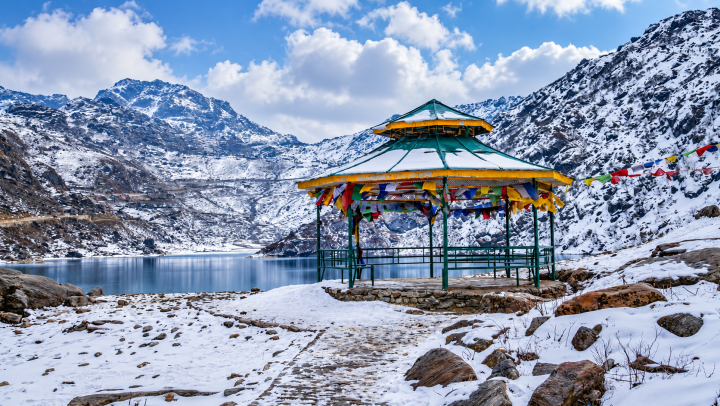
Tsomgo Lake, Baba Mandir and Nathula (Protected Area)
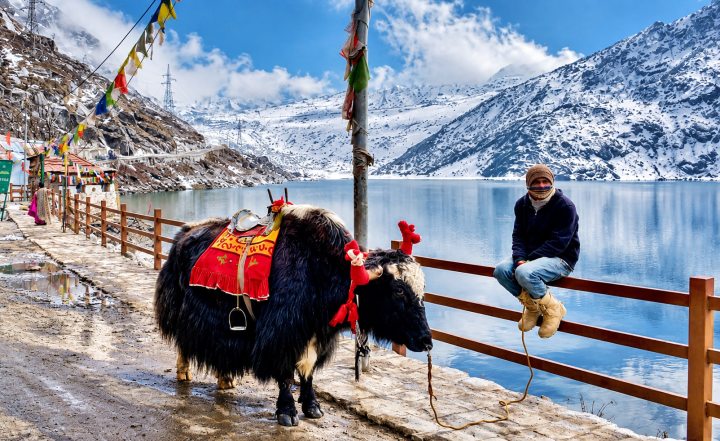
This is a full-day trip, usually 8-10 hours round trip, with altitudes over 12,000 ft at Tsomgo Lake and over 14,000 ft at Nathula. It needs a PAP; it's very weather-dependent and not for anyone with heart or respiratory conditions without a doctor's okay in advance - the altitude and cold surprise many travelers. If the road is closed or the permit is denied on the day, most operators can use a Rumtek or Ranka circuit instead, so it is worth checking your agent's backup plan before you go, not after.
Rumtek Monastery (Not Protected)
Rumtek is a simple half-day visit and can easily be combined with Ranka if you have the time. No special permit is needed, and it is about 24km and about an hour’s drive each way. It’s suitable for almost all types of travelers, including seniors, as there is only moderate walking within the monastery grounds.
What and Where to Eat
Don't just opt for momos and thukpa, the obvious Sikkimese selection. If you really want to get into the local cuisine, try gundruk (fermented leafy greens), sinki, or simple Nepali dal-bhat thalis. You can find these all over town, not just in the cafés on MG Marg that cater to tourists. Tibetan food is a natural complement to these, and basic Indian and Chinese fare is available right on MG Marg itself.
Vegetarian food is really easy here. Jain and vegan travellers should still flag requirements ahead, though, especially outside MG Marg, as stock, butter, and sauces are not always obviously flagged. Dining options thin out greatly after 8-9 pm outside the main square, especially in Tadong, Deorali, and outer areas, so plan your dinner timing if you are staying away from MG Marg.
All figures above are an indicative planning range; reconfirm before booking.
Best Time to Visit Gangtok
No season can guarantee snow, a clear view of Kanchenjunga, or access to Nathula on your particular dates; plan for probabilities, not promises.
Which Gangtok Trip Fits You?
Realistic Gangtok Trip Budget
All numbers below are per person per day, twin sharing, indicative planning ranges - reconfirm before booking.
Gangtok Itinerary Options
Option 1: Gangtok Essentials (2 Nights / 3 Days)
Option 2: Gangtok Plus Tsomgo-Nathula (3 Nights/ 4 Days)
Option 3: Relaxed Gangtok With Buffer (4 Nights/5 Days)
Mistakes Travellers Commonly Make
The most common mistake is to book an early flight or train on the same morning you leave Gangtok: a 4.5-hour drive can be 6-7 hours with one landslide clearance or a slow stretch near Rangpo, and missed flights from Bagdogra are unrecoverable. If you have a really early departure, add a Siliguri-area buffer night.
Another common disappointment is assuming all “mountain-view” rooms share the same view; ask for a photo first. Treating Nathula as a sure-fire inclusion, rather than a weather- and army-dependent add-on, leads to avoidable frustration. Build in a backup plan.
Other recurring problems include: choosing a hotel without asking about steps or taxi access, squeezing three circuits into one rushed day, not allowing for monsoon rain buffers, taking photocopies but not originals to a checkpoint, selecting a vehicle based only on the lowest quote without checking what it covers, and confusing kilometers with actual driving time on hill roads.
Why Choose Tripjyada for Gangtok
Good Gangtok trip planning isn’t just knowing about places; it’s also about ordering them sensibly. Which circuit fits into half a day, which hotel area suits your travel style, and which vehicle makes sense for your group? Gangtok itineraries are created by Tripjyada on the basis of these pragmatic decisions rather than a checklist.
This involves selecting hotel locations for the needs of the customer - vehicle access for a family, walkability for a couple, lift and level access for senior travelers - and selecting cars by size and comfort levels rather than the lowest quotes. We pre-coordinate permit documentation for Tsomgo Lake, Baba Mandir, and Nathula, pace sightseeing realistically rather than cram it into one rushed day, and stay in touch during monsoon-season disruptions or road closures so you have a workable backup plan rather than a stalled plan.
For travelers combining Gangtok with North Sikkim, Darjeeling, or West Sikkim, we also plan the routing so as to avoid unnecessary backtracking between bases. If you are trying to figure out how Gangtok fits into a larger Sikkim trip, get in touch with Tripjyada, and we will help you put together a realistic itinerary around it.
Two nights cover the main city and monastery circuits comfortably. Add a third for the Tsomgo Lake–Nathula excursion, and a fourth for a genuine weather or road-condition buffer, or if staging onward to North Sikkim.
No permit is required for Indian citizens to enter Sikkim or for ordinary Gangtok sightseeing; a valid photo ID is enough. A separate Protected Area Permit is needed only for Tsomgo Lake, Baba Mandir, and Nathula.
No. It is commonly closed to tourists on Mondays and Tuesdays, and access on other days depends on army clearance, weather, and road conditions. Treat it as a probable rather than guaranteed inclusion.
Yes. NJP to Gangtok is a direct road journey of around 125 km, typically 4-4.5 hours by private taxi, shared jeep or SNT bus, without needing to route through any other town.
Yes, with some planning. Choose a hotel with confirmed vehicle access and a lift, favour the culture and ropeway circuit over steeper viewpoints, and build rest time into the Tsomgo Lake excursion given the altitude.
MG Marg suits travellers who want to walk to restaurants and shops; Development Area suits families needing vehicle access at the door. Deorali and Tadong are more budget-friendly but require more reliance on taxis.
Foreign nationals can generally visit Tsomgo Lake and Baba Mandir with a Protected Area Permit arranged through a registered agency, but Nathula itself is typically restricted to Indian citizens only.
It can be budget-friendly or premium depending on the hotel category and how much protected-area excursion time you include; see the budget table above for indicative per-day figures across categories.
Yes, this is a common and practical combination, typically 3.5-4.5 hours apart by road. Keep the Gangtok leg efficient rather than duplicating similar viewpoint-style sightseeing in both towns.
Winter (December-February) offers quiet, low-crowd travel and occasional snow in town, but expect cold nights, morning fog, and a higher chance of Nathula being closed due to weather. It suits travellers prioritising peace over guaranteed excursions.